Vercingetorix And His Quality Mares All Set For New Records


Last Ever Trippi At BSA Nationals
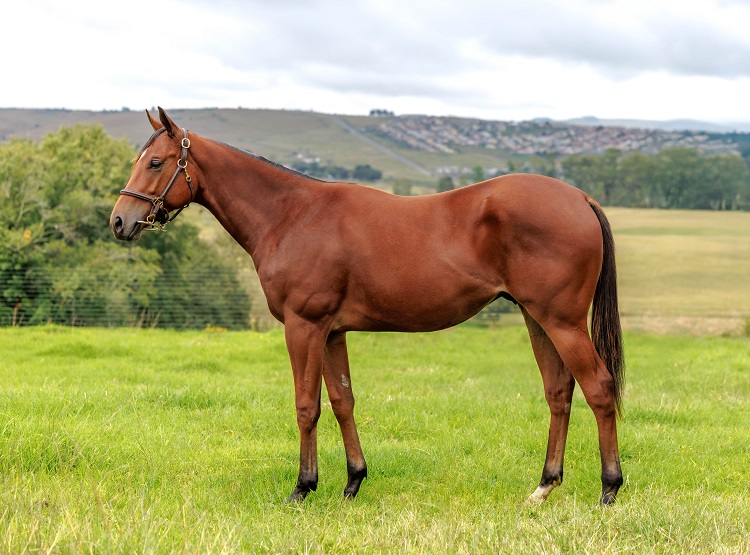
Lot 189, the last ever Trippi at a BSA National Yearling Sale. (Picture: BSA)
Lot 189, a Bloomhill Stud-bred colt out of a one-time winning Snitzel mare, will see a significant moment in BSA National Sales history.
This will be the last ever Trippi sold at BSA Nationals.
It will be an emotional moment for Gaynor Rupert of Drakenstein Stud as this stud farm owes its Champion Breeder and multiple times Champion Owner status to the maginificent son of End Sweep.
It is worth looking at the following piece written by Robin Bruss about Trippi as it emphasises how important he has been to the success of Drakenstein Stud.
Bruss wrote:
In 2008, Gaynor Rupert had an important decision to make regarding the foundation sire for her Drakenstein Stud, her thoroughbred breeding farm established in 2003 on the very beautiful 3,200 acre L’Ormarins Wine Estate.
The land, known as L’Ormarins, was occupied from 1694 by French Huguenot, Jean Roi, who established the first 4000 vines. The farm was acquired by Anthonij Rupert with the vision to establish the finest wines in the country, but tragically, he lost his life in a car accident in 2001, and Johan continued the vision in honour of his late younger brother.
It was Johan that suggested to Gaynor that she bring her horses to L’Ormarins, located at the foot of the Drakenstein mountains near the picturesque village of Franschhoek and to use the high slopes adjacent to the famous vines. Gaynor then nurtured her own vision: to breed quality racehorses both as a commercial venture and to enjoy the sport of racing for herself.
Studying some of the best stud farms around the world, the layout was spacious, and the design an architectural masterpiece on a scale befitting the joy of owning of a thing of great beauty.
Visitors have remarked that Drakenstein’s vista is one of the most beautiful on the planet.
Foundation Sire
By 2008, it was time to think about the acquisition of a foundation sire, a horse with speed and quality, and preferably, a stallion that had proven himself on the racecourse plus distinguished himself as a fertile sire of quality winners.
“It was Charles Faull of Form Bloodstock who did the research and provided me with a list of potential candidates” says Gaynor, “and I determined to travel to America to go and see them”
“Charles put me in touch with his American counterpart, Joe Brocklebank, and we began to go and see the horses one by one”.
“When I saw Trippi, I was instantly taken in by his great beauty, his quality and physical prowess, and he was easily the best horse that I had viewed and I was determined to make a successful offer to buy him”.
Apart from his race record, Trippi was rapidly gaining attention as the leading young sire in the state of Florida. He had sired 17 juvenile winners in his first crop racing in 2005, amongst them 3 Stakes Winners.
He had 5 SW in each of his second and third crop, and by the time Gaynor arrived in 2008, his first three crops had yielded 13 SW, although only 3 of these were graded stakes winners, and the best of them Miss Macy Sue, had won one Gr.3 and five listed races.
Michael O’Farrel of Ocala Stud said that selling Trippi was bitter sweet but two of the partners in the horse were dispersing and a third was reducing his stock – and Trippi’s sale had returned a handsome dividend on their investment.
Negotiation was quick and Trippi was purchased for a significant sum (he was in fact the most expensive horse ever imported to South Africa at the time) and Gaynor had her proven sire around which to build Drakenstein Stud.
Syndication followed in South Africa, Drakenstein retaining half the horse and inviting other breeders to subscribe for shares.
The syndication was not without some difficulty as the exchange rate made the shares expensive in the South African market , and there was more than one complaint at the time about affordability.
However, when buying a stallion in 2008 that had commenced covering in 2002, there was the knowledge that Trippi had several crops in the pipeline in America and it didn’t take long for good news to flow from across the oceans.
In 2009, a Trippi filly called Jealous Cat (USA) emerged as blindingly fast in her first start over 900m. The owners did something very unusual. They flew her across the Atlantic to Europe and ran her in the fastest juvenile race for fillies, the Queen Mary Stakes (Gr.2) at Royal Ascot, and she blitzed the best of the European generation at 5 furlongs to win easily.
R Heat Lightning (USA), another brilliant Trippi filly, emerged as one of the best of her generation in USA, winning the Spinaway S. (Gr.1) for 2 year olds at Saratoga and completed her juvenile season with an excellent 2nd in the Breeders Cup Juvenile Fillies S. (Gr.1), to rank #2 amongst all American juvenile fillies.
The 2007 and 2008 American crops yielded 9 SW each and a further 3 in the 2009 crop. In 2009, Trippi was the #1 Leading Sire in Florida, #1 Leading Sire of 2 Year Olds in Florida, and #3 Leading Third Crop sire in America, with 75% winners, and progeny earnings of $16 million. His American yearlings were selling for up to US$450,000.
Ultimately Trippi’s 7 American crops ended up yielding no less than 33 Stakes Winners who won 72 Stakes Races.
It was pretty obvious that Trippi’s acquisition was a brilliant buy with fortuitous timing – a season or two later and he would have been double or triple the price and almost certainly would not have arrived in South Africa.
“I was very, very lucky with Trippi” said Gaynor, “when I saw him, he was the most beautiful horse, I fell in love with him and my instinct was that I just knew that he would be very successful for us – and that is how it has turned out to be.”
Trippi in South Africa
Trippi’s first South African Crop was bred on a service fee of R100 000, with Western Winter (R200 000), Jet Master (R170 000) and Fort Wood (R150 000) standing for higher fees.
Trippi’s first crop of runners made him Champion First crop Sire and his career started well, but it wasn’t until this second SA crop that he sired his first South African Grade 1 winner when Klawervlei bred For the Lads who won the Gr.1 Golden Slipper. The third crop was the ‘tour de force’ : here were FOUR Gr.1 winners in the crop and the first South African Champion.
Drakenstein bred and raced Inara (out of Mountains of Mist IRE, by Derby winner Shirley Heights) added stamina to Trippi’s speed, and Inara won 5 Gr.1 events from 1200m to 1800m – she won the Majorca S. Gr.1 twice, the Empress Club S. Gr.1 and the Garden Province S. Gr.1, and the Paddock S. Gr.1, traversing all three major provinces and became Equus Champion Filly.
Drakenstein foaled and raised, Deo Juvente won the R3,5m Champions Challenge Gr.1 over 2000m, Afrikaburn won the Golden Horseshoe Gr.1 and Maine Chance bred Real Princess won the SA Fillies Sprint Gr.1.
Eight Gr.1 wins in a short space of time and Trippi deservedly became Champion Sire in 2015.
“It hasn’t been a surprise for us that Trippi ended up being Champion Sire” said Drakenstein’s Manager, Kevin Sommerville, “and we are super proud of him and his achievements. A lot of owners and trainers always thought that Trippi could not become Champion Sire because he was so fast that he would not sire winners at 2000m. or more where most of the big prize money is concentrated. But he has succeeded in siring winners over all distances”
In fact, Trippi in his total career has sired 830 individual winners who have won 2,813 races and these range from 800m to 2500m+.
He is also a very versatile stallion on any racing surface and he has Graded SW in dirt and turf and polytrack and on all types of going, although they love the firm ground of South African tracks.
“One of the hardest things to find in breeding,” observes Kevin, “is to find a stallion that’s ultra consistent and predictable and it makes them very easy to work with. Trippi is that stallion and he is one of the best I have ever seen”.
“Trippi foals are independent, they have strong minds, they don’t like to be forced to do what they don’t want to do, so in the hands of patient trainers, who don’t get too hard on their horse, Trippi progeny thrive. They are very, very genuine horses, both colts and fillies, but you have to give them the chance to be genuine”.
The 2014 crop yielded SA Classic Gr.1 winner Lobo’s Legend, bred by Klawervlei and in 2015 Drakenstein bred Chimichuri Run emerged as a top class sprinter winning 8 races including the Tsogo Sun Sprint Gr.1 and R2,2 million, earning a reputation for toughness and soundness.
He now stands as a stallion at Blue Sky Thoroughbreds in KZN.
Trippi’s first Horse of the Year Jet Dark was born in the 2017 crop.
Kevin remembers him as a tall and lanky yearling with great scope, but very immature at the National Yearling Sales, where he sold for R200,000 to the bid of Nic Jonsson, an exceptional buy as Jet Dark went on to win five Gr.1 races including the L’Ormarins Queens Plate Gr.1 twice, the Cape Met Gr.1, the Champions Cup Gr.1 twice, and was 2nd in the July Gr.1
He was Equus Horse of the Year and in 2023 he retired back to the home of his birth to stand as the most popular first crop sire attracting 134 mares at a fee of R30,000.
The exceptionally good looking Jet Dark is out of a Jet Master mare and inherited more size and scope than the regular Trippi – and more stamina.
It’s interesting that Jet Master mares sent to Trippi produced 28 runners and 25 of them (90%) were winners, and three were SW.
The stellar year enjoyed by Trippi in 2023 was really all about the stellar year enjoyed by Drakenstein, now come of age as a mature farm with a steady stream of high class runners, good sales results and great homebred results.
“I have had great luck” says Gaynor “because I retained Sweet Pepper as a future broodmare and she won the Allan Robertson Fillies Championship Gr.1, Trip of Fortune didn’t make his reserve at the yearling sales and so I raced him, Charles Dickens couldn’t go to the sale because it was thought he had a soft palate issue, and Winchester Mansion broke a bone in his neck as a weanling and I could not sell him”
In the rollercoaster of horseracing, somehow it’s often what appears to be the bad news, that ends up as the most fortuitous.
Winchester Mansion’s victory in the 2023 Hollywoodbets July Gr.1 was Trippi’s first Gr.1 win at 2200m and in South Africa’s most prestigious race.
Trip of Fortune won the 2023 Horse Chestnut S. Gr.1 at 1600m and Charles Dickens became the best horse owned and bred by Drakenstein to date, with 10 wins in 13 starts, over R5m in earnings.
All three earned Equus Awards in 2023 and were major contributors to the exceptional achievement for Drakenstein to become both Champion Owner and Champion Breeder in the same season, a feat that I believe was only accomplished once before – by Graham Beck.
Of the 13 individual winners produced by Trippi, one was un USA and 12 in South Africa. Of these 9 (or 75%) were bred and foaled at Drakenstein, two came from Klawervlei, and one from Maine Chance.
Of the 13, four have inbreeding to Mr Prospector within 4 generations, the rest are essentially outcrossed matings, so Trippi suited a very wide variety of mares. Almost all have inbreedings to Northern Dancer further back but that’s almost impossible to avoid these days.
The highest percentage of stakes winners belong to the cross between Trippi and SA bred Dynasty, with 10 runners, 8 winners (80% winners) and 4 of the 8 winners becoming stakes winners, amongst them the brilliant Charles Dickens.
Charles Dicken’s incredible victory in the L’Omarins Kings Plate Gr.1 on 6 January sealed Trippi’s career with an incredible champion as Trippi, now 27 years old comes to the end of his reign, with Charles Dickens and Jet Dark stepping up to assume the mantle as sons of the King and Lords of Drakenstein.
It’s hard not to quote from namesake Charles Dickens in the unfolding story of what has happened.
“They are the future of Drakenstein Stud” says Gaynor, without omitting the 30 odd daughters of Trippi on the farm, most of them stakes winners.
From chaos comes order, from opportunity comes enterprise, from immaturity comes maturity, and in the roller coaster of horse breeding and racing, Drakenstein first phase has been cemented by the steadiness of a great foundation stallion.
Finding outcrosses for Trippi’s sons and daughters becomes the next step for the potential growth of the farm, but that’s all for discussion in a future chapter of the story.

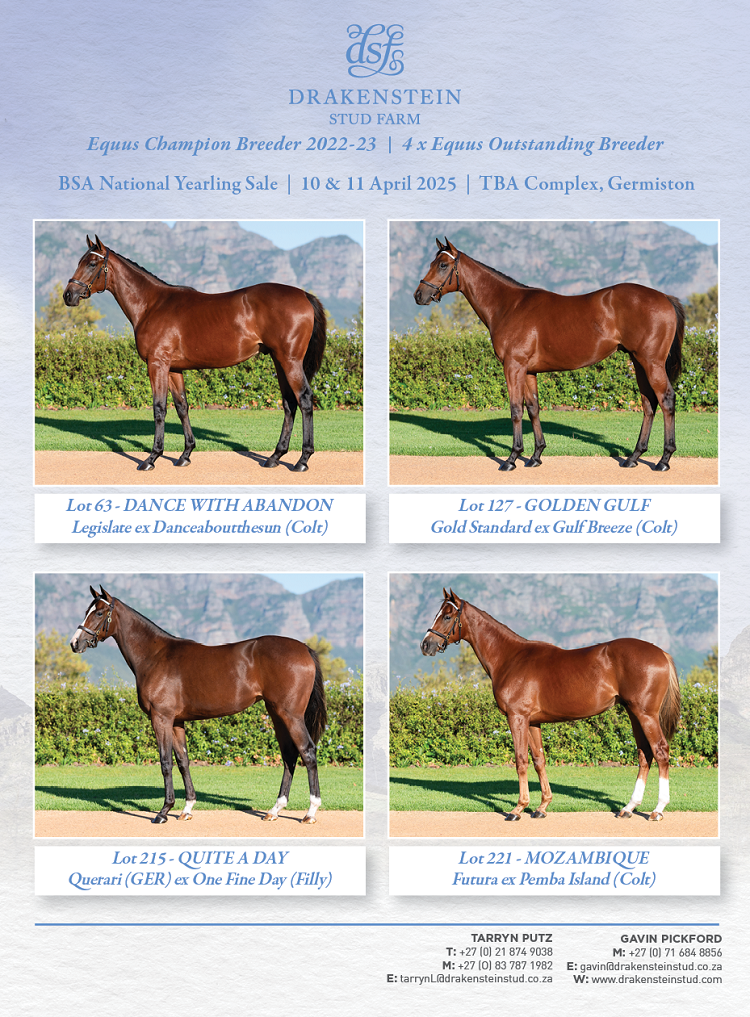
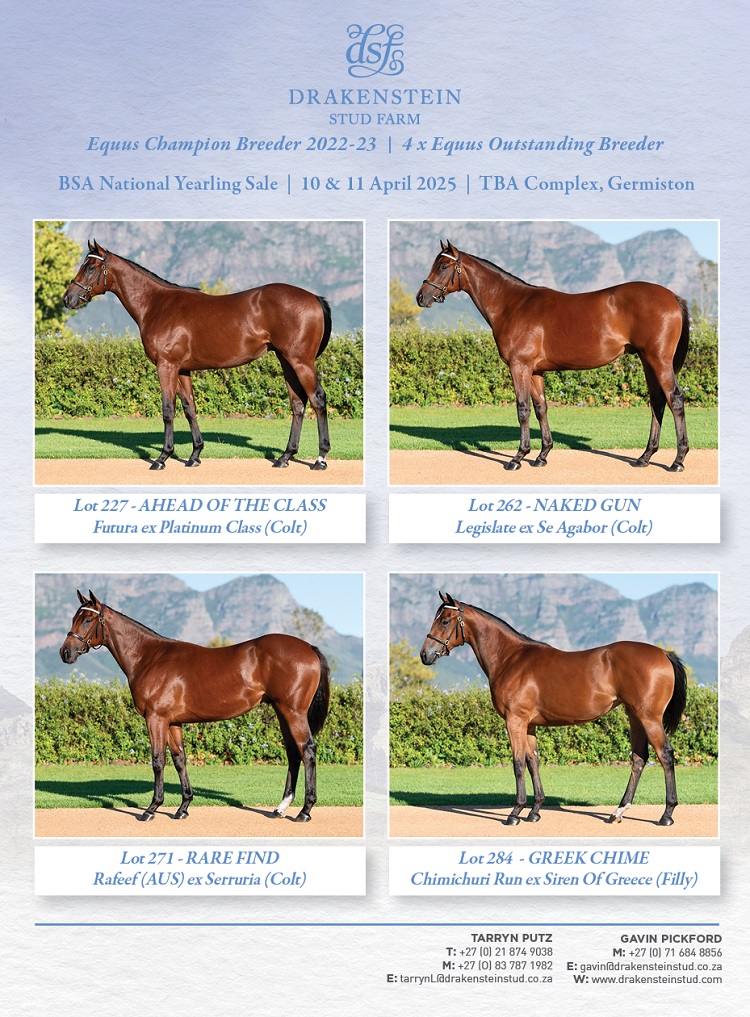
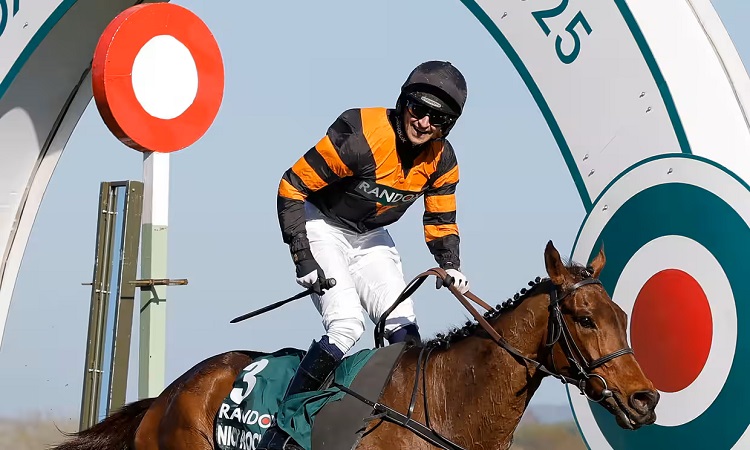
Which Lots Will Go For Seven Figure Amounts?


The Strongest Grand National Ever?
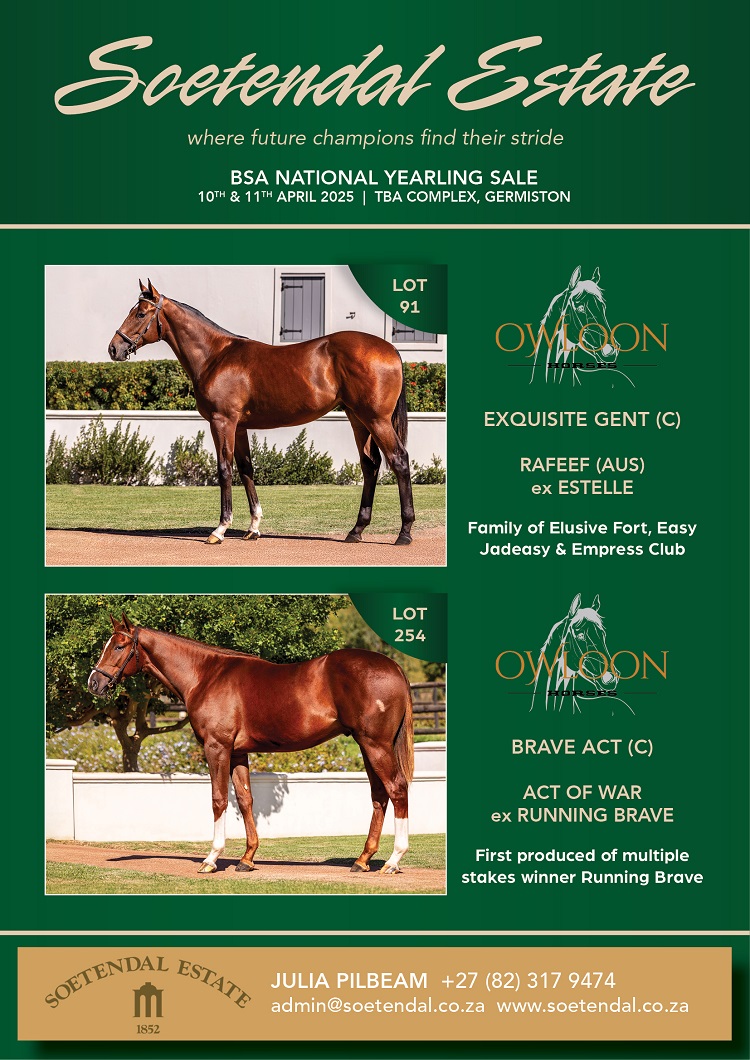
Nick Rockett ridden by Patrick Mullins wins the Grand National on day three of the Grand National meeting at Aintree Racecourse. Photograph: Tom Jenkins/The Observer
Simon Rowlands reveals the numbers which suggest the 2025 Grand National could be the strongest renewal ever seen.
That measure is the one of ratings, the sophisticated means for performance analysis first developed in the sport decades ago. Ratings quantify a horse’s achievements in the here and now, and in a manner that allows comparison across geographical and historical distance.
This year’s Grand National at Aintree on Saturday saw the first three among the four top-weighted horses in an era in which very smart contestants are plentiful.
My own assessments have Nick Rockett running to the highest rating by a winner in over 30 years, the same with the third Grangeclare West, while runner-up I Am Maximus recorded the highest rating in the race since Suny Bay occupied the same berth in 1998.

Going back further, there were some hugely talented winners and placed horses – not least Red Rum – but seldom the strength in depth that the modern Grand National displays. Nor did the cream rise to the top in quite the manner it did this time round.
In many past Nationals, there were yawning gaps back to the placed horses and also-rans, and some surprisingly ordinary performance ratings could get you into the first five. Not so now.
The average margin to a third-placed finisher has been a fraction over eight lengths since 2013, when the fences were fundamentally altered, where formerly that was 14 lengths. More horses get round, and those horses include plenty of good ones.
In other respects, “best” is less easily measured and tends to be in the eye of the beholder. There are still many who think the race is too dangerous and some who think it is too safe. For their separate reasons, there was little that was good about Saturday’s contest.
My view is that the race is much the better for the safety improvements, including the long-overdue reduction in the field size and attendant chaos, without having lost much of its spectacle.
The Grand National may not have the grip on the public it once had – I strongly suspect that would have been the case regardless – but we might not have a race at all if insisting on sticking with it as it once was.
Another aspect of the Grand National that is relatively easily measured is how it unfolded in terms of pace.
The start was moved forward at the same time as those wholesale fence modifications, and the first fence was moved closer to that revised start before 2024, but little else has changed (the race was always shorter than the advertised 4m4f).
Finishing speed %s – the speed in the closing stages as a % of the average speed for the race overall (which eliminates the effects of different distances and goings) – show that the 2025 Grand National was eighth slowest from the third-last fence of the 30 races for which I have comprehensive sectionals at 104.1%.
Fastest, in relative terms, was the 1970 edition won by Gay Trip (109.7%) and slowest was Red Rum’s legendary 1973 win over Crisp (98.5%).
Mr Frisk’s record-breaking win on firm ground in 1990 was the fastest in absolute terms (89.0s), while this year’s comes in around mid-field at 96.3s, a reflection of the slightly quicker conditions than normal. Red Marauder’s race on bottomless ground in 2001 came in at 120.1s, by the way!
Closer inspection shows that this year’s race was run at a more or less average pace early, but at a stronger one from around the Melling Road on the first circuit. That was what caused even high-quality horses to finish fairly slowly for the conditions.
Jockeyship, including judgement of pace, continues to count for a lot in the Grand National, as it does more widely, of course. I do not often criticise riders, as I think they do a difficult job well most of the time, and instances of incompetence, or worse, are relatively rare.
But there were a surprising number of questionable rides during the three-day Grand National meeting, some of them identified through sectionals and some of them more subjective.
Getting the best hurdler of the modern era into the worst possible position in the Aintree Hurdle on Thursday was not Nico de Boinville’s finest hour, though I suspect Constitution Hill might still have dug him out of a hole had he not fallen two out.
The visual impression that Mark Walsh left Kopeck de Mee too much to do in the Premier Handicap Hurdle on Friday, and should have won, is backed up by sectionals (105.6% finishing speed, 102.4% is par).
Less immediately obvious is that Sam Ewing on Romeo Coolio did too much too soon (98.4% finishing speed, 103.5% is par) in the Grade 1 Novice Hurdle on Friday, as Jack Kennedy had on the same horse at Cheltenham, though Salvator Mundi did win the race convincingly in the end.
The most significant pace burn-ups of all came in the concluding handicap hurdle on Friday (She’s A Saint came home in 99.4% while everything else finished even slower) and the Grade 1 Novice Hurdle which preceded it, won by Julius des Pictons (100.9%, 103.8% is par).
Jonjo O’Neill Junior waited and waited on Mister Meggit in the latter, but still went too soon and had no response to stronger stayers after getting the last all wrong (100.0% finishing speed). Meanwhile, de Boinville on Califet En Vol paid even more for a premature move, dropping from first to sixth and posting a 97.1% finishing speed. The latter looks a fine prospect for novice chasing, ridden appropriately, of course.
To give out a bouquet alongside the brickbats, Harry Cobden rode a peach of a race on Kalif du Berlais in the Maghull Chase on Saturday, briefly steadying what had been a sound enough pace then coming home in a 107.2% finishing speed.
If Saturday’s Grand National might have been objectively the best in history then the same day’s Dubai World Cup can be considered one of the worst renewals of a race that has not really lived up to its billing since Arrogate (rated 134 in that year’s World’s Best Racehorse Rankings) beat Gun Runner (130) in 2017.
Hit Show was the surprise winner, in that he had failed to score at above Grade 2, had been thrashed at levels by Locked in the Santa Anita Handicap the time before, and ran to a rating of just 118. Only Ushba Tesoro (115) has run to lower in victory with me in the race’s 29-year history, while 136-rated Dubai Millennium in 2000 remains the standout.
Meanwhile, the Dubai Sheema Classic on turf, which preceded the World Cup on Saturday, with the first five all rated in excess of 120 on recent WBRRs, looks top-class and is likely to be in the running for strongest race of the year come the end of it.
It was a slowly-run affair, however, as reflected in the winner Danon Decile’s 113.6% finishing speed. He is now rated 124, while runner-up Calandagan did even better (114.4% finishing speed), gaining on the winner in each of the final three sections but still a length and a quarter down at the line.
Calandagan has lost each of his last three Group/Grade 1s, but he is much better than most winners at that level. He remains on 125 with me, and should win a big one or perhaps two in 2025, perhaps a Prince of Wales’s Stakes and/or an Eclipse in the not-too-distant future.
In a recent development on ATR, Expert Analysis will be attached to the results for those top Dubai races, as well as to selected others around the world, alongside the existing Group/Grade 1’s and 2’s from Britain, Ireland and France. We have it all covered!

SAJA Graduates Have A Good Day At Happy Valley
Keagan de Melo wins the last race on the KW Lui Golden Empire, his 9th win of a tough season. (Pictures: HKJC)
An indication of how hard it is to win a race in Hong Kong is that unless mistaken there has never to date been an instance in which the three ex-pat South African jockeys on the island have all won a race at the same meeting.
However, it was as close as ever to that at Wednesday night ‘s Happy Valley meeting, because both Luke Ferraris and Keagan de Melo rode winners and another South African Jockey Academy graduate Karis Teetan also rode a winner.
Lyle Hewitson went home winless in what was a forgettable meeting.
Read the report on the meeting below:
Hugh Bowman takes Happy Valley honours with treble
By Leo Schlink (HKJC)
Riding with supreme confidence, Hugh Bowman’s growing winning streak continued with a treble at Happy Valley on Wednesday night (9 April) as the Australian struck success for the fourth consecutive Hong Kong meeting.
Bowman triumphed on Stellar Swift for David Hayes in the second section of the Class 4 King’s Park Handicap (1200m), Danny Shum’s Harmony Galaxy in the Class 4 Wylie Handicap (1800m) and Mark Newnham’s Casa Rochester in the Class 4 Oi Man Handicap (1650m) to maintain impressive momentum with six wins from his past 31 rides.
“I had nice rides coming into the meeting and you don’t expect them all to win. This guy (Casa Rochester) had an awkward barrier (gate eight) but he was aided by a frantic speed and I did think he would be a better horse ridden to hit the line and it proved right,” said Bowman, who boosted his haul for the season to 56 wins, a tally bettered only by Zac Purton’s 88.
“I think he’s still pretty immature and lacks strength, he might have more in store.
“Stellar Swift was courageous over 1400m last time and I think David (Hayes) made a huge judgement call to come back to 1200m and it proved to be right. He travelled beautifully throughout, there was a bit of traffic to contend with but when I needed him to lift, he did it for me.”
Stellar Swift drives to victory at Happy Valley.
Four-year-old Harmony Galaxy had six starts in Brazil as Empire Of The Nile, twice finishing third at Group 1 level and transferred to Hong Kong on a mark of 68 and snared three minor placings before striking tonight as a 55-rater.
“Harmony Galaxy has been a work in progress, he needs to relax to produce his best and I was a bit worried going past the post for the first time that he wasn’t settling for me but then the pace increased and he got into a really beautiful rhythm,” Bowman said.
“I thought he got to the front with a bit in hand and he floated a bit and waited so, again, he’s still got more up his sleeve but it was great to win for him and the connections.”
Colourful King continued his sharp rise with an electrifying sprint under Andrea Atzeni to land the Class 3 Hong Kong China Rugby Cup Handicap (1000m) for David Eustace.
“He was impressive today. The race looked like it was going to set up well for him as they were clearly going to go pretty quick up front which would certainly help. But having said that, he won with authority,” Eustace said.
“We were confident he would improve. This was only his third start and he trained on really nicely, so we came here hopeful.”
With two wins from three starts, the Blue Point gelding’s only unplaced run came on debut at Sha Tin on 16 February.
“His first run down the straight at Sha Tin certainly had merit and that was only his first start. I think we would get 1200m but I certainly wouldn’t want to rush there either so I’d like to keep him to 1000m if we could,” said Eustace, who trained a treble at Sha Tin on Sunday (6 April).”
Flying Fortress benefited from a brilliant Harry Bentley ride to win the Class 3 Mong Kok Handicap (1650m) for Cody Mo as Michael Chang-trained Sovereign Fund prevailed in the first section of the Class 4 King’s Park Handicap (1200m) under Karis Teetan.
Caspar Fownes-trained Verbier broke through at his 14th start, leading all the way for Luke Ferraris to land the Class 5 Yau Ma Tei Handicap (1650m) before Dennis Yip’s Northern Fire Ball won the third section of the Class 4 King’s Park Handicap (1200m) for Jerry Chau. A son of Sooboog, the three-year-old improved his record to two wins and two minor placings from nine starts.
Hong Kong International Sale graduate Golden Empire posted his seventh victory from 38 starts under Keagan De Melo for Francis Lui to take his earnings to HK$8.67 million with a defiant front-running display.
Hong Kong racing continues at Sha Tin on Sunday (13 April)..

Cosmic Year Puts In Fine Reappearance And Shortens For 2000 Guineas
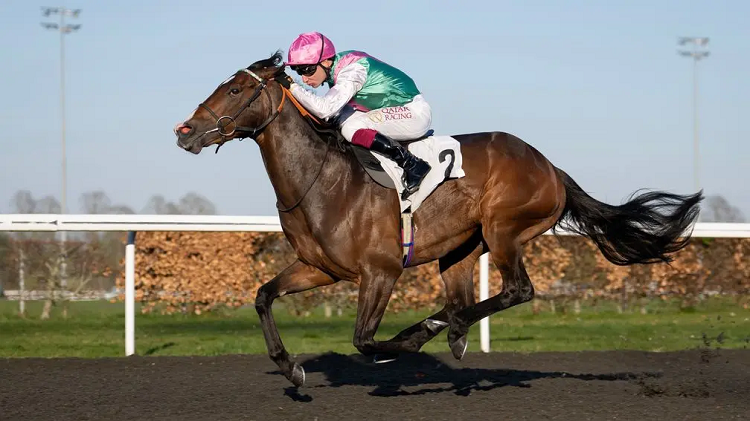
Cosmic Year: won by five lengths on his return Credit: Edward Whitaker (racingpost.com/photos)
Cosmic Year cut to 6-1 second favourite for 2,000 Guineas after five-length win – but Newmarket participation not certain
Jack Haynes (Racing Post)
Leading 2,000 Guineas hope Cosmic Year was cut to 6-1 second favourite for the opening Classic after his return win at Kempton but his participation at Newmarket is not certain.
Juddmonte’s son of Kingman maintained his unbeaten record in smooth fashion, quickening up smartly to score by five lengths under Oisin Murphy in the 7f novice at odds of 2-9.
Paddy Power initially trimmed the Harry Charlton-trained Cosmic Year to 7-1 (from 8) joint-second favourite alongside Shadow Of Light for the Betfred-sponsored Classic at Newmarket on May 3.
He was subsequently cut again to 6-1, making him the outright second favourite behind 11-2 market leader Twain.
Charlton said on Racing TV: “It was as good as we could have hoped for. They went slow and he has such a good temperament to take it all in his stride.
“We’ll have to speak to the Juddmonte team about plans as they have a lot of other horses, like Jonquil and Field Of Gold. There’s a few horses in the mix so we’ll let the dust settle.
“I would be a little wary – as I was with Newbury this weekend – of running him on quick ground. The weather will change at some point but if it stays dry through the month it feels like it could be a bit of a tough ask.
“The French and Irish Guineas are other options, as well as different routes into Royal Ascot, but we’ll see what the team want to do. It’s massively important to have these kind of horses in the yard and to be able to deliver for a proper operation like Juddmonte is essential.”
Tiki set for 1,000 Guineas
Kon Tiki enhanced her 1,000 Guineas credentials when beating five previous winners in the mile fillies’ novice.
The daughter of Night Of Thunder was a 220,000gns purchase for owner Peter Harris at the Tattersalls Book 1 sale in 2023 and has a 2-2 record after her success by a length and a quarter under Billy Loughnane.
Kon Tiki was cut to 40-1 (from 66) for the Betfred 1,000 Guineas at Newmarket on May 4.
Her trainer Jane Chapple-Hyam said: “This was a competitive novice but we felt coming here gave us an extra week up our sleeve for the Guineas rather than running in the Nell Gwyn.
“I’m thrilled with the way she did and how she quickened up. As long as she comes out of this okay she will go for the Guineas.”




Wood Memorial Winner Rodriguez A Game-Changer For Sire Authentic
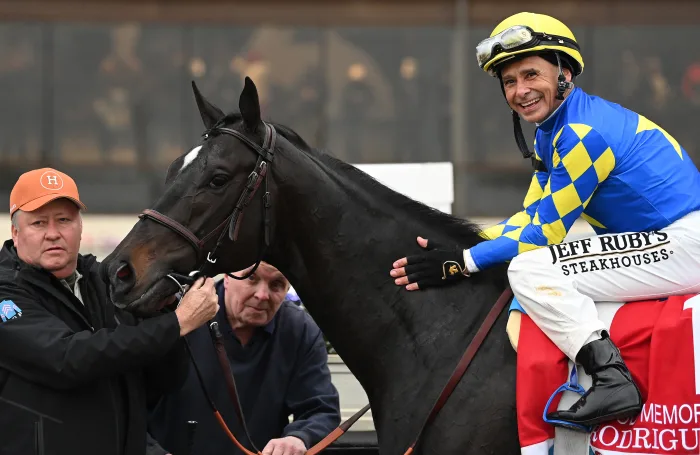
Rodriguez after winning the Wood Memorial. Susie Raisher/Coglianese Photo
Wood Memorial winner Rodriguez has become a breakthrough horse for his sire, Horse of the Year Authentic
Frank Mitchell (Paulick Report)
Authentic (by Into Mischief) was the 2020 Horse of the Year after a resounding set of victories that included the Grade 1 Kentucky Derby, Haskell Stakes, and Breeders’ Cup Classic, as well as an immensely game second in the Preakness Stakes to champion filly Swiss Skydiver (Daredevil).
Brought back to stand at Spendthrift Farm in 2021 alongside his famous sire, Authentic had his first crop of racers come to the racetracks of America last season as 2-year-olds. Authentic fielded the third-largest group of named first-crop juveniles, behind only fellow Spendthrift stallion and leading freshman sire Vekoma (Candy Ride) at 154 and the Gainesway stallion McKinzie (Street Sense), who ranked second among the freshmen sires last season and was represented by 150 named foals.
From his first crop last season, Authentic had the largest number of starters (92), with 24 winners, but only one stakes winner. At the end of the season, Authentic ranked seventh among the freshmen; not bad but not at all what had been hoped for. Yet even so, Authentic’s racing stock were giving signs that they were following a pattern of racing and maturation more similar to their sire’s improvement at three than that of the usual pattern of leading sire Into Mischief, who is a wellspring of speed and early maturity.
Among Authentic’s winners, 15 won going two turns, and several gave strong indicators that things might improve further with more distance and maturity. On Saturday at Aqueduct, Authentic was represented by his first graded stakes winner when Rodriguez won the G2 Wood Memorial. On the same day in California, the stallion’s son Westwood finished third in the G1 Santa Anita Derby to Kentucky Derby favorite Journalism (Curlin) and Baeza (McKinzie).
As a further indication of how the tides of time have changed for Authentic, he has risen to second place on the second-crop sires list, and although his runners last season earned $1.7 million, to this point in 2025, they already have earned $1.5 million.
Rodriguez is the stallion’s leading earner to date. Bred in Kentucky by Kingswood Farm and David Egan, Rodriguez is out of the fine mare Cayala (Cherokee Run), the dam of two previous stakes winners. These are the full siblings One Liner (G3 Southwest Stakes in 2017) and Provocateur (listed Hutcheson Stakes in 2022, also third in G1 Woody Stephens), both by Into Mischief (Harlan’s Holiday), and they have a stakes-placed full-sibling named Roderick, who ran third in the 2022 Nyquist Stakes at Keeneland.
Bred back to Into Mischief’s top-class racing son Authentic, the mare produced in 2022 a strikingly handsome, near-black colt later named Rodriguez.
Co-breeder Roderick Wachman (Kingswood Farm) said that “Rodriguez was a really nice foal from day one, but it was what we had come to expect from the mare. One Liner was her first foal, and he was so very nice that she was essentially ‘married’ to Into Mischief.”
The dam of these performers is Cayala, who was bred in Kentucky by Tenlane Farm in 2007. The filly changed hands as a foal, then again as a yearling, and she won a maiden special at Hollywood Park as a 3-year-old in 2010. The next year, she was exported, raced twice in Germany, and sold at the 2011 Tattersalls December mare auction, where Wachman purchased her for 17,000 guineas (approximately $25,000). The mare has proven a gold mine for her owners, and Rodriguez brought $485,000 at the 2022 Keeneland September yearling sale. He is the seventh foal from the mare, who is 18 and recently produced a full sister to the Wood Memorial winner.
Wachman continued: “David Egan had pinhooked her from foal to yearling, then her half-sister Goldrush Girl (by Political Force) had finished second in the Golden Rod Stakes so recently that people weren’t generally aware of it. So we were able to buy her pretty reasonably.
“She’s a medium-sized mare, not a big mare, and pretty correct and well-balanced. My experience is that medium-sized mares tend to get you better racehorses.
“But it’s not all simple with her. She’s not the easiest mare to settle; she’s trickier early in the year and then she blossoms in April and May. She has just foaled a filly by Authentic; so we did get her in foal on a slightly earlier cover last year.”
Cayala has certainly been worth the work of getting her in foal, even on her schedule, because the partners have sold more than $2 million worth of yearlings from her, with four of the seven earning black type, and Rodriguez advancing to the top of the deck with his G2 victory over the weekend.
“Even though Rodriguez was nice,” Wachman said, “he really was making very good progress as we came to September, and he had a tremendous sale.”
Donato Lanni, agent, bought Rodriguez out of the Indian Creek consignment for $485,000 at the September sale. And the colt is owned by SF Racing, Starlight Racing, Madaket Stables, Stonestreet Stables, Dianne Bashor, Determined Stables, Robert Masterson, Tom Ryan, Waves Edge Capital, and Catherine Donovan.
The colt’s next stop is expected to be the Kentucky Derby next month.





Today's Question
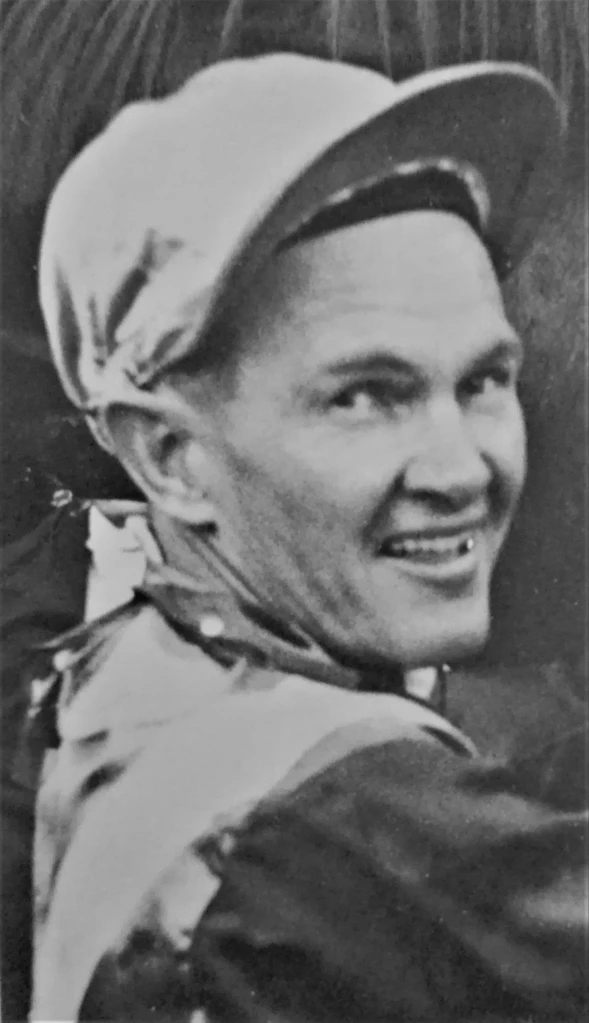
Who holds the record for the most jockeys championships in South Africa?
The picture gives a clue to the answer
FIELDS, Friday, 11 April
Fairview
Today’s Question Answer
Harold “Tiger” Wright and Michael “Muis” Roberts both won eleven championships.