




KZN Racing will not only be rescued by the proposals which the Gold Circle members will vote on, but it will be improved. (Gameplan Media Photograph).
Gold Circle To Be Rescued & Taken Over
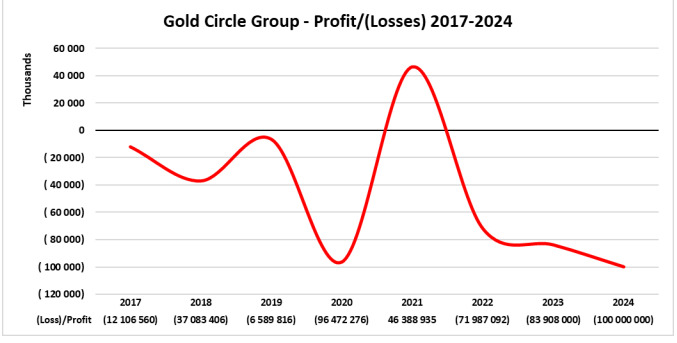
Gold Circle have revealed in a letter to members that a R500 million rescue infusion from Holywoodbets and Greg Bortz will be on the condition that the latter two entities then take over the control of the company.
Hollywoodbets will provide a R400 million capital contribution in exchange for the transfer of the shares and loan accounts currently held by the Gold Circle Racing Club to Hollywood Sportsbook Holdings (Pty) Ltd (or a nominated wholly-owned subsidiary company).
24 August 2023


One of the many awards received by Gaynor Rupert of Drakenstein Stud (Photo: Equus Awards).
Drakenstein Stud’s Equus tally on Wednesday night was Champion Breeders, Champion Owners, Outstanding Breeders, Champion Broodmare, Champion Stayer (Bred), Champion Middle Distance Horse (Owned and Bred), Champion Miler (Owned and Bred), Champion Older Male (Owned and Bred) and Champion Three-year-old male (Owned And Bred).
That means they made nine visits to the stage and walked away with 13 trophies.
This could well be a record.
If anybody is going to better this tally it will be them this season.
Gr 1 winners Rain In Holland and Silver Darling have been retired to stud but many of their other top horses such as Charles Dickens (homebred), See It Again (Bred), Trip Of Fortune (homebred), Safe Passage (homebred), Winchester Mansion (homebred), Future Pearl (bred), Golden Hostess (homebred), Itsrainingwilliam (homebred), Winter Cloud (homebred), Beach Bomb (homebred), Siver Falcon (bred), Pacaya (bred), Winter Cloud (homebred), Hluhluwe (bred), Hold My Hand (homebred) look likely to be campaigning on their behalf again and some youngsters are sure to emerge.


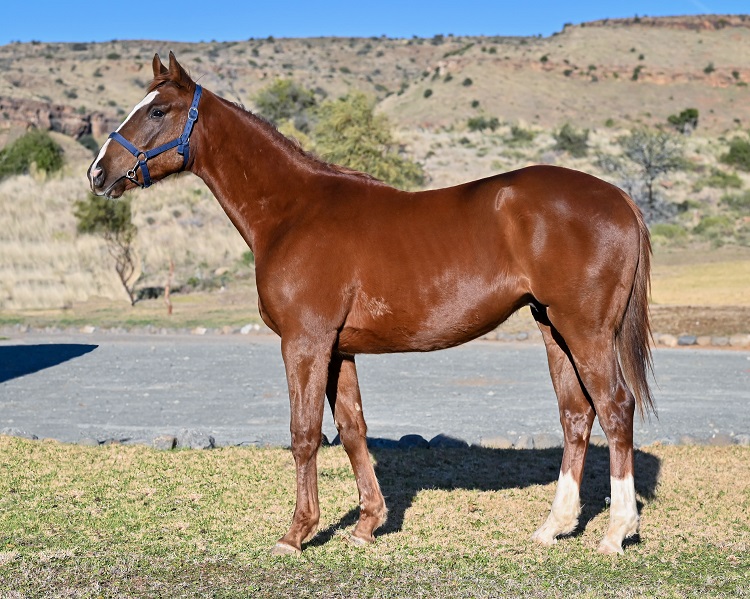
Grand Pavilion (Lot 34) is a Futura half-brother to Winchester Mansion (BSA).
Drakenstein Stud, South Africa’s Leading Breeders of 2022-2023, will be well represented at BSA’s August Two Year Old Sale, which starts tomorrow (Saturday) at 12H00 at the BSA Sales Complex at Gosforth Park and continues on Sunday at the same starting time. Drakenstein’s resident sires Futura, Gold Standard, One World, What A Winter and the late Lancaster Bomber all represented here, with many of the two-year-olds on sale hailing from outstanding female lines.
One clear standout in this draft is the superbly bred colt Grand Pavilion (Lot 34), a son of Drakenstein’s increasingly successful stallion Futura. Out of a mare by world leading broodmare sire Spectrum, Grand Pavilion is not only a half-brother to last season’s G1 Hollywoodbets Durban July winner Winchester Mansion but also to former G1 Gold Medallion victor Sand And Sea.
Winchester Mansion famously did not make it to the sale because he broke a vertebra in his neck shortly beforehand and he went on to win the July in Drakesnstein’s colours, while a Drakenstein-bred son of Futura, Future Pearl, won another famous Durban race last season, the World Pool Gold Cup.
There is sure to be a of interest in lot 34.
The Drakenstein draft can be viewed from Blocks A and D respectively at the BSA Sales complex at Gosforth Park.
Vercingetorix, whose recent flagbearers include unbeaten sensation Mrs Geriatrix among others, will be represented by many lots at the Sale. Included among them is Millstream Farm offering Lot 98, who is a three-parts sister to G1 Summer Cup winner Zillzaal.
Among the Millstream draft is one of the most cleverly named lots at the sale, the Gary Player-bred Act Of War filly My Girl Viv, who is out of Mrs Player. The latter herself is a full sister to G2 Zulu Kingdom Explorer Golden Slipper winner Cockney Pride.
Millstream Farm’s August Sale draft can be found in Block B at the TBA Complex in Germiston.


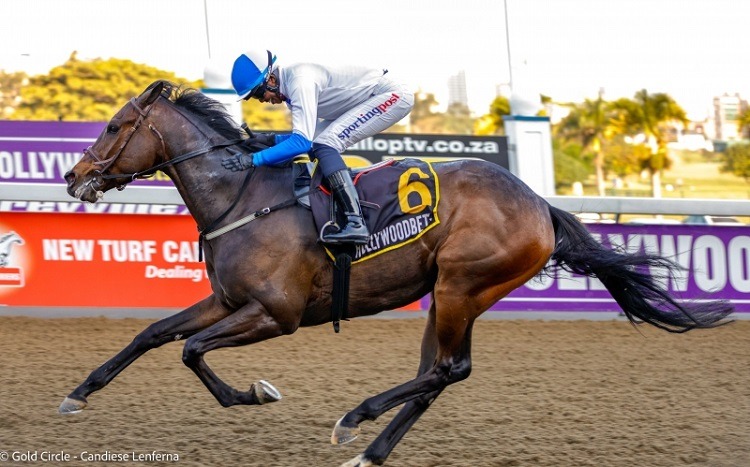
Natyam can get Gareth van Zyl’s Cape campaign rolling tomorrow (Picture: Candiese Lenferna)
Cape Racing Preview for 26th August 2023


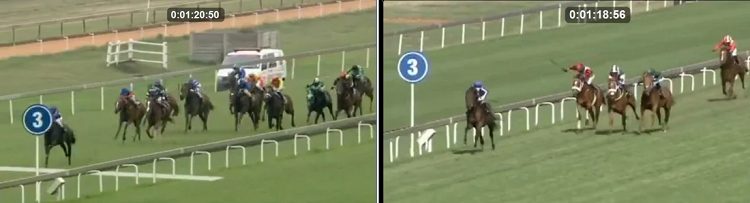
The above picture accompanied one of Jay August’s detailed post race analyses which were much appreciated by his followers.
Jay August Passes
There were few with a greater passion for horseracing than Jay August who passed away early this morning after a long illness incredibly bravely borne.
He conscientiously kept a consummate database of South African racing results that stretched back to at least the beginning of this century.
As a true intellectual who previously worked in the financial investment arena he made recommendations to the racing industry not on a whim but based on meticulous analysis of the data in his hands.
He also provided fascinating post race analyses.
This was usually based on the sectional timing system he constructed using specialised software whose timing method was the counting of visual frames and he measured distance by picking out the distance poles which were visible on TV.
He did not expect public credit for his work and often did it in his free time.
Therefore there are few who appreciate how much he contributed.
His understanding of the racing program and where it was failing was probably the area he was able to make the most valuable recommendations.
His work in this field has been incorporated in some instances.
He also worked with the NHA and with various commitees like the Asian Pattern commitee.
It is no coincidence his best friend was chief handicapper Lennon Maharaj.
Jay’s passion for the game was not just limited to statistics but also to the history of the game.
He often wrote about the great horses of the past and unearthed facts about them not generally known.
He also fished out relatively unknown horses who were underappreciated in history.
The best birthday present he ever received was a visit to the world’s leading throughbred breeding farm, Coolmore Stud.
His passion for the sport made his long battle against debilitating leukemia a touch easier to bear and he loved nothing more than to speak for hour after hour about horseracing.
It has to be said he did not suffer fools gladly but at the same time he was an enlightened human being who cared genuinely for the lot of the underprivileged and was outspoken on their behalf.
He was lucky to have a mother in Thelma who took excellent care of him during his illness and together with his much loved cat and nearby friends Lennon and Marlene Maharaj provided him with companionship.
Condolences to family and friends of a man who will be sorely missed in many ways and who has left a void impossible to fill as far as the racing industry is concerned.


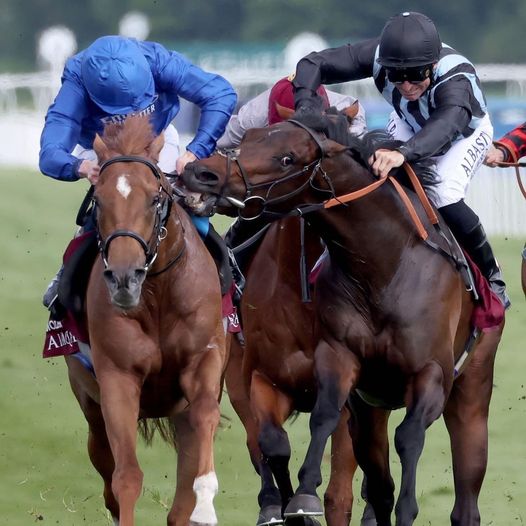
Chindit Nipping Off To India
Chindit purchased by Dr Cyrus Poonawalla for eventual Indian stud career
Poonawalla is a major breeder in India whose pharmaceutical business has played a major role in Covid vaccinations around the globe.


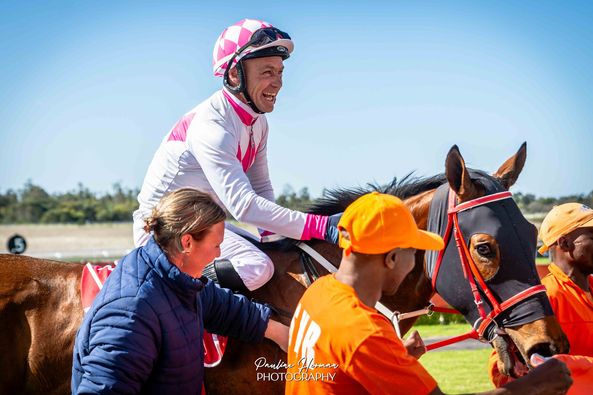
Marco van Rensburg is chuffed to land a quick double for the Sharon Kotzen yard who went on to score a treble (Pauline Herman Photography).
Sharon Kotzen Treble, Van Rensburg Double, Mitchley/Yeni Double
Sharon Kotzen had a treble on the Fairview Poly today and two of them were ridden by Marco van Rensburg.
Muzi Yeni rode a double for Kelly Mitchley to increase his lead in the national jockeys championship.
Yeni goes to 23 wins for the season at a strike rate of 22.12% and he is leven clear of Richard Fourie and Gavin Lerena on the national log.
Mitchley doubled her wins for the season to four and has done it at a strike rate of 11.11%.
The double was Marco van Rensburg’s first wins of the season and he has done it at a strike rate of 5.56%.
Sharon Kotzen goes to five wins at 16.67%.


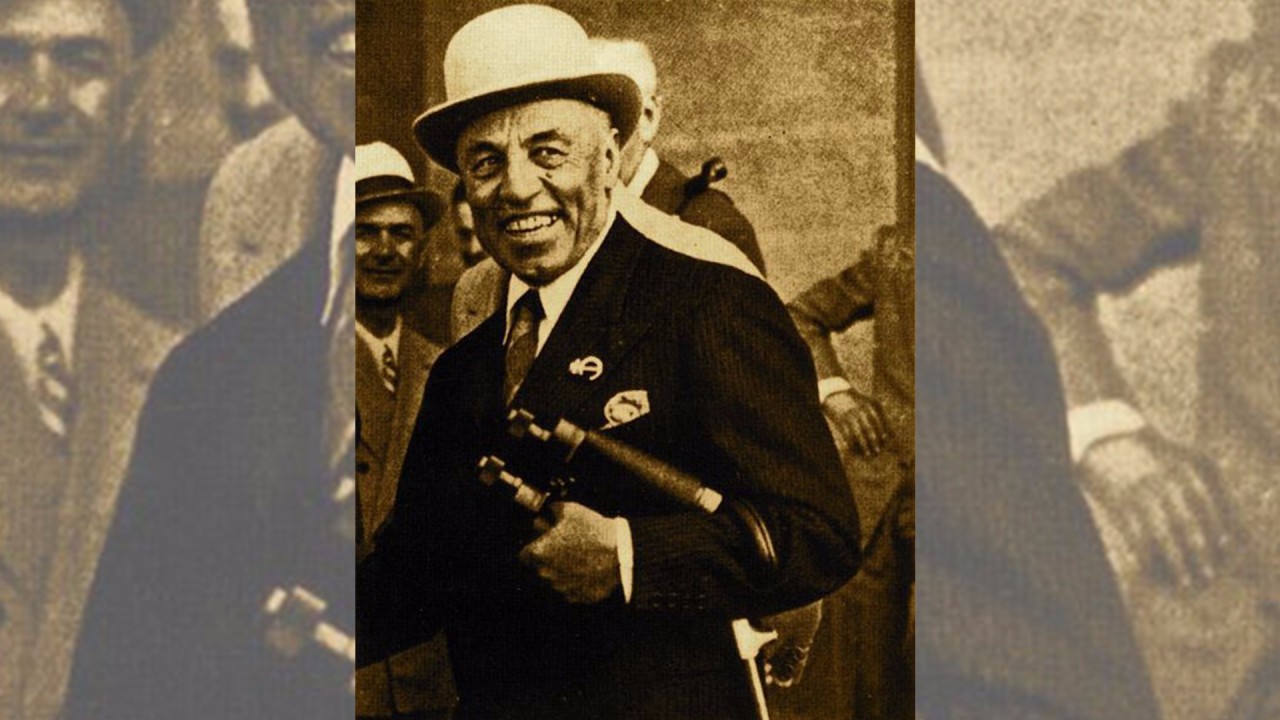
Today’s Question
Who was responsible for this famous quote: “The Thoroughbred exists because its selection has depended, not on experts, technicians, or zoologists, but on a piece of wood: the winning post of the Epsom Derby.”
Question answer at the bottom of the newsletter
The ‘Wizard of Dormello’, as he came to be known, founded his stud on the site of a former silkworm farm in 1898. That property, on the banks of Lake Maggiore in northern Italy, became the base for a breeding operation that dominated the national scene for well over half a century, and for much of that time was recognised as one of the foremost studs in the whole of Europe.
Tesio was contemporary with other great breeders, such as Marcel Boussac in France and the 17th Earl of Derby and HH Aga Khan III in England, but while those titans had the benefit of gifted advisers and professional horsemen to aid them, the Italian achieved all his successes as a one-man band.
He employed no agents, no advisers, no managers. He, and he alone, selected the fillies and mares for his stud, and he devised every mating for them. He made all his own decisions, from first to last, as he was also his own trainer. He mastered every aspect of the business, his phenomenal results attained by dint of unparalleled judgement, expertise and flair.
Laying down foundations
Tesio recognised early that he would need to acquire stock from sales in England if he was to establish a successful operation in Italy, and he became a frequent visitor to Tattersalls, collecting fillies and mares, often at knockdown prices, for the paddocks at Dormello.
On his trip to the December Sales in 1905 he dug quite deep to lay out 600gns for the ten-year-old American-bred mare Jiffy, a former winner of the Ebor Handicap. The mare was carrying a Bay Ronald filly, Fidia, who would supply her breeder-owner-trainer with his first prestige triumph, notching a win in the 1909 Gran Premio di Milano, Italy’s most important open-age event.
A previous purchase, for only 200gns at the 1904 December Sales, was Jenny Hampton, who founded a fruitful family at Dormello, the most significant of her brood being Guido Reni, who in 1911 became the first of 20 Derby Italiano winners bred, owned and trained by Tesio. (The final tally of his successes as breeder in that Classic became 22, two scoring after his death.)
Factfile
Born Turin, January 17, 1869
Stud Razza Dormello (later Razza Dormello-Olgiata) founded 1898
First Italian Derby winner Guido Reni (1911)
Unbeaten champions Ribot (16 races), Nearco (14 races), Braque (12 races), Cavaliere D’Arpino (5 races)
Prix de l’Arc de Triomphe winner Ribot (1955, 1956)
King George VI and Queen Elizabeth Stakes winner Ribot (1956)
Grand Prix de Paris winner Nearco (1938)
Coronation Cup winner Apelle (1928)
Ascot Gold Cup winner Botticelli (1955)
Goodwood Cup winner Tenerani (1948)
Italian 2,000 Guineas, Derby & St Leger winners Niccolo Dell’Arca (1941), Botticelli (1954)
Italian Derby & St Leger winners Michelangelo (1921), Bellini (1940), Tenerani (1947), Daumier (1951), Braque (1957)
Quadruple Italian Classic winner Jacopa Del Sellaio (all except St Leger 1932)
Most notable wins in Italy 22 in Derby, 11 in Oaks, 18 in St Leger, 22 in Gran Premio di Milano
Grand Prix de Paris runner-up Donatello (1937)
Died Milan, May 1, 1954, aged 85
Compiled by John Randall
The first ten of those Derby wins came in the 13 seasons up to 1923, by which time Tesio decided that he must test his stock in more demanding environments. He took Scopas to Germany for a victory in the 1924 Grosser Preis von Baden, and in the following year Apelle notched a win in the Criterium de Maisons-Laffitte.
In 1926 he went back to France with Apelle and Cranach for the Grand Prix de Paris, then regarded as Europe’s foremost international contest for three-year-olds. The pair finished unplaced, but the main objective of the trip, to get one or both of them sold, was realised. Apelle found a buyer, and the funds he brought in helped to ensure that Tesio could maintain his dominance in Italy.
Increasing the quality
But with his sights set on long-term top-level international competition, Tesio realised that he would have to patronise Europe’s best stallions, most of whom were based in England and France. And that would inevitably be a costly exercise.
Seven of his Derby winners had been by the leading Italian sire Signorino, and Havresac, another home-based horse, would deliver him champions in Cavaliere D’Arpino and Nogara, but his preference was for foreign sires when he could afford it.
What Tesio could afford changed significantly in the early 1930s, when he entered into partnership with the Marchese Mario Incisa della Rocchetta. His runners thereafter appeared on racecards as the property of Tesio-Incisa, and the stud book followed suit over the registration of his foals.
Needless to say, Incisa’s role was just to provide funds. He played no part in the making of any decisions about the horses of whom he was half-owner. But he recognised that when in partnership with a genius, it would be folly to query his actions. His investment delivered him a share in a lot of glory, if not actual financial profit, and the association ended only on Tesio’s death in 1954.
The first great successes for the partnership came from Donatello, whose Epsom Classic-winning sire Blenheim had become affordable under the new arrangement. Donatello won all his starts in Italy, including the Derby, the Gran Premio di Milano and the Gran Premio d’Italia, and but for a poor ride would have retained his unbeaten record in the Grand Prix de Paris.
However, the Longchamp performance was sufficiently impressive to attract a lucrative offer, and Tesio was happy to let the colt go. He had bought Donatello’s grand-dam, Duccia di Buoninsegna, as a yearling in England for only 210gns, she had bred him two dual Classic winners, one of whom had now delivered him a champion – and Edward Esmond’s cheque for £47,500.
Donatello proceeded to make a significant mark as a sire in England, his progeny including two outstanding performers in Alycidon and Crepello, and they in turn found success as champion sires.
Enter Nearco
Nearco was born a year after Donatello, and there were marked similarities over their careers. Both were dominant performers, unbeaten in Italy, but Nearco went one better than his former stable companion by retaining his undefeated record in the Grand Prix de Paris, his victims including the winners of the Epsom (Bois Roussel) and Chantilly (Cillas) Derbys.
Tesio had bought Nearco’s grand-dam Catnip at the 1915 December Sales in Newmarket for only 75gns, and she had bred him Nogara, who won both Italian mile Classics in 1931. Her breeder’s intended mating for her in 1934 was with Fairway, but he could not obtain a nomination and had to settle instead for Fairway’s brother Pharos.
Nearco may not have been the foal Tesio wanted, but the re-routing of Nogara to Pharos had enormous consequences, for the breed as well as for the breeder. Within days of the colt’s victory at Longchamp, Tesio sold him for £60,000 to Martin Benson, and as events unfolded over the years that followed, it became clear that Nearco was the most important horse imported to England since the Godolphin Arabian.
Branches of Nearco’s sire line through Nasrullah and Nearctic continue to thrive famously 80 years after that epoch-making deal.
Tesio was never a conventional breeder, but he was consistent in his practice. He did not believe that families thrived in perpetuity, and when they had evidently peaked, he lost interest in them. Nearco had a long, highly successful career at stud in Newmarket, but his breeder could not care less. He only ever used the horse once, sending him a mare with a dodgy foaling record, and she duly proved barren.
The breeder’s masterpiece
Tesio’s name rings a bell for many for his most famous quote: “The Thoroughbred exists because its selection has depended, not on experts, technicians or zoologists, but on a piece of wood: the winning post of the Epsom Derby. If you base your criteria on anything else, you will get something else, not the Thoroughbred.”
The assertion does not bear close scrutiny, and would never have been granted credibility if it had not been made by such an eminent breeder. Tesio always liked to use Derby winners on his mares, but they were rarely major contributors to the success of his breeding programme. In some respects he seemed an eccentric, his keen patronage of Airborne an obvious example. Sometimes conventional breeders knew better.
World War II limited Tesio’s access to many major stallions and forced him to use some of his own horses, which he ordinarily would not have done. But one of them, Bellini – his 15th Derby victor – was responsible for Tenerani, a Triple Crown winner at home who made visits to England for victories in the 1948 Queen Elizabeth Stakes and Goodwood Cup.
Tenerani was no oil painting, but he was a powerful galloper who excelled over long distances. He stood at Dormello for three seasons, but Tesio then sent him on lease to England’s National Stud, and when that operation offered £20,000 to buy him outright a deal was swiftly concluded.
Tenerani was too plain and too much of a stayer to impress Tesio as a likely major sire, so he would not use him on any of his most distinguished mares. But he did send him Romanella, who had been a speedy two-year-old and had failed to train on, and that mating resulted in Ribot, who would come to be regarded as Tesio’s masterpiece.
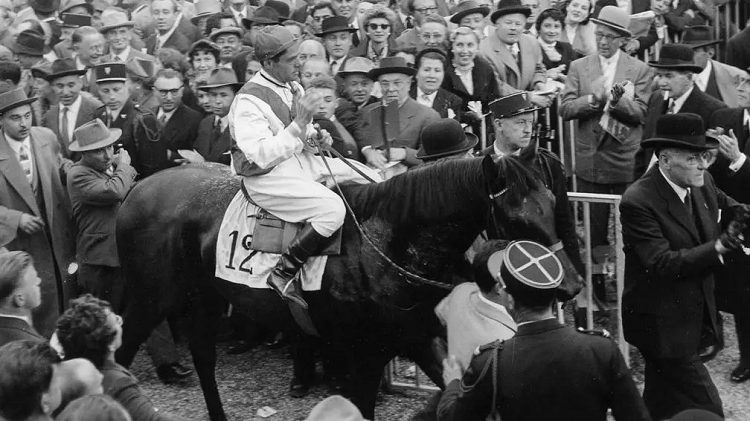 Ribot: Tesio did not live long enough to see his magnum opus race Credit: Archives APRH
