Habib In Fine Form Ahead Of Zeus' Quest
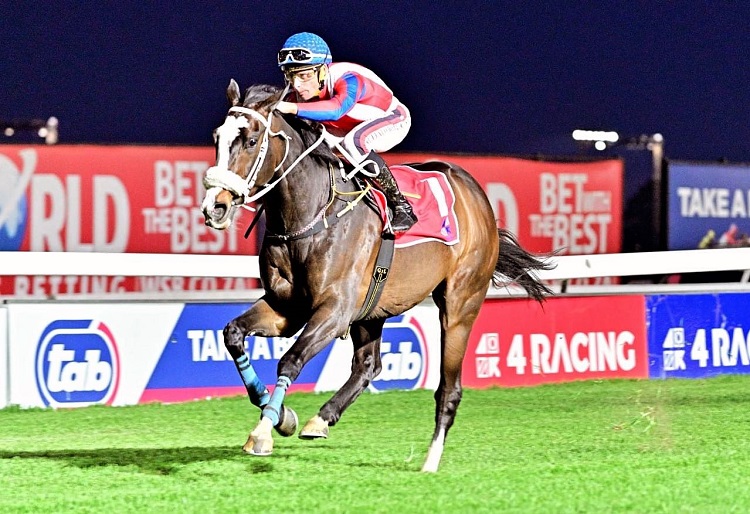
Zeus made it a hattrick when waltzing in by 5,25 lengths in the Listed Allied Steelrode Java Stakes over 2400m at Turffontein Standside on October 28. That race was named after the 1950s horse Java, a three-time winner of the Johannesburg Summer Handicap (Summer Cup) (Picture: JC Photos).
Turf Talk
Fabian Habib was in fine form at the Vaal straight course today with two winners and one of them was running in the same colours as his Betway Summer Cup hope Zeus.
The Soft Falling Rain gelding Zeus is probably the most backed horse in the Summer Cup’s twenty horse field having come in from long odds to be 18/1 with the sponsor, although he is as short as 10/1 on the boards of some firms.
At the time of first entries he was merit rated only 94 so had a lot to do to get in.
However, he then reeled off two impressive victories, by 4,25 lengths over 2400m at the Vaal Classic track and by 5,25 over 2400m at Turffontein Standside. That followed an easy win over 2600m at Turffontein Inside in August.
He showed a fine turn of foot in all of those victories despite carrying 60kg, 58kg and 60 kg respectively.
He is now merit rated 111, so is officially just 1kg under sufferance carrying the minimum weight of 54kg.
Habib spoke to Andrew Bonn about Zeus at the Summer Cup draw ceremony.
He said, “I think from his last run he still has plenty to come. Obviously over this distance there are question marks but with that strong turn of foot if there is a strong pace he must have a massive chance. Obviously he is a better horse over 2400m but I think in my heart he is a massive runner. We have the draw in our favour (draw four). I’m very happy with the draw. It is a very competitive field but I’m very happy with him.”
Habib had four runners today and it was a sign of things to come when he finished third with the 100/1 shot Commander Of All (Captain Of All) in the second race over 1400m.
In the third race his first-timer Taegen’s Champ was backed in to 17/10 favourite.
There was a big ownership presence on course and another tell tale sign was that Gavin Lerena was up.
Lerena has had nine rides for the Habib yard this season and five wins, a strike rate of 55,5%.
Three of those wins were on Zeus, but unfortunately for the connections Lerena is the first call rider for big owner Laurence Wernars and he will therefore be riding the Summer Cup defending champion on Saturday, Puerto Manzano
Taegan’s Champ was very green and there was a worrying moment or two, but he ultimately quickened superbly at the business end to win by 6,50 lengths with the commentary almost being drowned out by the cheering of the excited connections.
Taegan’s Champ is named after the grandson of Fabian Habib’s father-in-law Zack Nassif, whom Fabian described as “the backbone of my yard.”
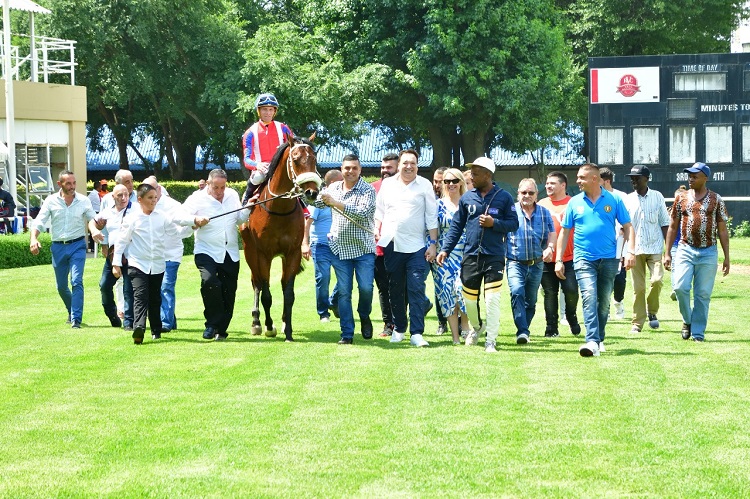
Young Taegan and others lead in Taegan’s Champ at the Vaal today (Thursday) (4Racing)
Zack Nassif’s Tri-Deal Sixteen CC is a shareholder in both Taegan’s Champ and Zeus and he is also a shareholder in Absolute Value (Master Of My Fate), who won today’s sixth race over 2400m under 4kg claimer Kobeli Lihaba.
Jonathan Nassif is a central figure in the yard and is a shareholder in all three of those horses too.
An interesting shareholder in Taegan’s Jet is Johnny Habib.
Johnny Habib is having a fine run as an owner and will be hoping for another win from the superstar he part-owns, the Tony Peter-trained Main Defender (Pathfork), who runs in the Gr 3 New Turf Carriers Merchants over 1160m at the “Big T” on Saturday.


Brace Yourselves For The Cape Summer Festival Of Champions
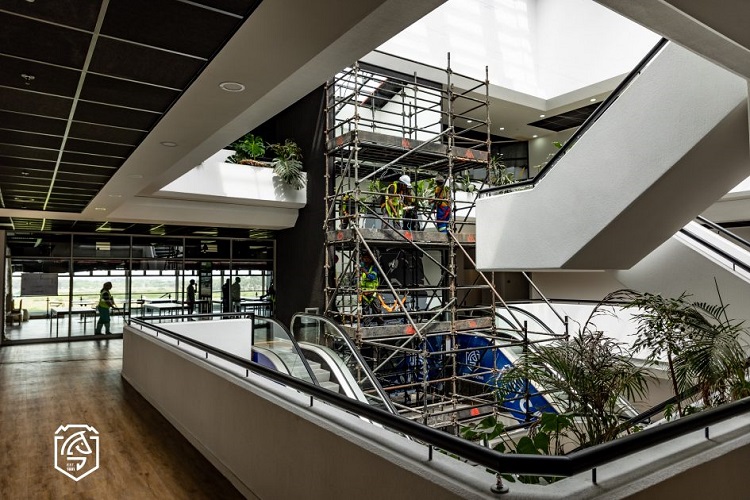
The renovations at Hollywoodbets Kenilworth have the goal of making it a top five racecourse in the world (Picture: Troy Finch)
Cape Racing
A high-quality nine-race programme, headlined by the R500 000 Gr2 Cape Punters Cup, heralds the launch of the Cape Summer Festival Of Champions and marks Cape Racing’s highly anticipated return to a new-look Hollywoodbets Kenilworth on Sunday, 26 November.
With South Africa’s premier classic, the Gr1 Hollywoodbets Cape Guineas, just over three weeks away, the Gr2 Cape Punters Cup hosts a field of ten promising sophomores, all with aspirations of a starting berth in the big one on 16 December.
The clash between Sean Tarry’s exciting Tail Of The Comet and Vaughan Marshall’s Gr3 Cape Classic winner Questioning, could provide an early insight on Sunday into the likely roll of the honours dice, as the summer unfolds.
There are five high class feature events on the 26 November programme, with the day starting at 12h20 as the gates fly open in the R200 000 The Futurity Plate, the opening 800m scurry of the Cape season.
In the R225 000 City Of Cape Town Listed Sophomore Sprint, Dean Kannemeyer’s Gr2 winner Outlaw King carries top weight as he makes his season debut.
The son of Rafeef bids to match strides with the likes of the Azzies’ Gr2 Betway Joburg Spring Challenge third-placer Ready To Charge, and Candice Bass-Robinson’s powerful quartet, headed by Jerusalema Rain, a one-time conqueror of top 3yo Sandringham Summit!
Besides the blue-blooded horseflesh in action on the track, visitors can expect to experience an electrifying transformation at Hollywoodbets Kenilworth, as Cape Racing takes Sportstainment to a whole new level!
The Cape’s most celebrated and historic racing playground is a work in progress, but already boasts upgraded facilities and a whole new racing experience, as stakeholders enjoy another chapter in the Racing Renaissance Cape Summer Season of Champions.
Become part of the sports betting action of horseracing, amplified by newly installed big screens, revamped grandstands, and upgraded lounges, with food and beverage offerings to suit every taste.
“We are thrilled to present the Cape Punters Cup as the inaugural event at Hollywoodbets Kenilworth as we launch phase 1 of our exciting upgrades and renovations. The upgrades have been meticulously designed to elevate the overall experience for our patrons, and we are confident that the combination of exciting horseracing, family-friendly activities, and live entertainment will make this a standout day for all,” says Cape Racing’s COO Donovan Everitt.
The Cape Summer Season of Champions continues at Hollywoodbets Kenilworth on Saturday 2 December when the Gr1 World Sports Betting Cape Fillies Guineas headlines another terrific afternoon of horseracing.
The third Festival meeting on Sunday 10 December, features the Gr2 Cape Merchants, followed by another action-packed day on Saturday 16 December, which will see the running of the Gr1 Hollywoodbets Cape Guineas, the Gr3 Ridgemont Peninsula Handicap, and the Gr3 Hollywoodbets Victress Stakes.
Day Five of the Festival includes South Africa’s premier weight-for-age mile, the Gr1 L’Ormarins King’s Plate and the career-defining fairer sex clash, the Gr1 Cartier Paddock Stakes on Saturday 6 January.
Another racing and social highlight is the Gr1 World Sports Betting Cape Town Met scheduled for Festival Day Six, 27 January 2024. The platform of champions runs alongside the Gr1 Cape Flying Championship, the Gr1 Majorca Stakes, the Gr3 Western Cape Stayers, the Listed Summer Juvenile Stakes, and the Listed Olympic Duel Stakes.
The Gr1 SplashOut Cape Derby Seafood and Jazz Festival concludes the Seven-Day Festival on Saturday 24 February, supported by the Gr2 Khaya Stables Diadem Stakes, the Gr3 Vasco Prix Du Cap, the Gr3 Cape Of Good Hope Nursery, and the Listed Jet Master Stakes.
An invitation is extended to families to join in the fun on Sunday, with a dynamic kids’ zone featuring obstacle courses, inflatables, games, and more.
Prepare to be entertained with a line-up of buskers and live music entertainment.
As a special treat all visitors on Sunday will be treated to a complimentary hot dog and cool drink, setting the tone for a day of fun, excitement and enjoyment.
Feel the thrill, witness the speed, and be a part of the racing magic, with lucky draws and giveaways up for grabs.
Don’t miss out on this memorable day at Hollywoodbets Kenilworth on Sunday 26 November!


Summer Cup: A tough case to crack, but Cousin can do it
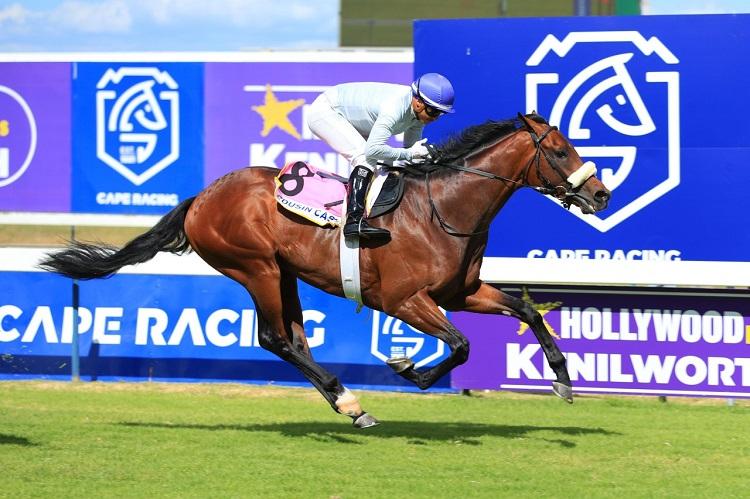
Cousin Casey’s last win was in the Gr 2 Punters Cup, which will be run at Hollywoodbets Kenilworth on Sunday, meaning he has gone winless for a year (Picture: Wayne Marks)
Bookmakers laying 5-1 the field in a race notorious for upsets
Mike Moon (The Citizen)
The bookmaker betting tells the story of prospects for the 2023 Grade 1 Betway Summer Cup at Turffontein on Saturday. It is 5-1 the field, with more than half the lineup at 20-1 and under. That means the race is very competitive at the sharp end but lacking quality in depth.
Hollywoodbets Durban July champion Winchester Mansion is the ruling favourite, having run once since his great day at Greyville, finishing a close-up fourth in the Charity Mile at Turffontein.
The five-year-old is trained by Cape Town’s Brett Crawford but has been resident on the Highveld since being gelded earlier this year and has clearly thrived. He carries 5kg more than he did in the July, but he has shown he can lug lead in feature company and, with his partner in glory Kabelo Matsunyane in the irons, must be included in all permutations.
Defending champ Puerto Manzano is “King of the Big T”, having posted all 10 of his wins at the city course.
Coincidentally, no jockey knows this racecourse as well as Gavin Lerena, who steered him to victory in the Charity Mile and does duty again. A wide draw is not the disadvantage it might be for lesser horses as this guy loves hauling them in from off the pace up the long Turffontein run-in. Another must inclusion.
Trainer Sean Tarry is bidding for a sixth Summer Cup trophy with three runners: Cousin Casey, Bless My Stars and Litigation. It’ll be a brave or foolish punter that leaves any of them out.
Atticus Finch from Alec Laird’s stable is another for whom the unkindest cut has worked wonders. Since they were lopped off a year ago, he has gone from one-time winner to serious contender for the main prize in Joburg’s most famous race.
He won four in a row to squeeze into this lineup and, though he has not yet tried this 2000m, the way he rallied to grab honours in the 1800m Victory Moon Handicap three weeks ago suggests he does have the stamina for the job.
Runner-up in the Victory Moon, Electric Gold, also squeaked into the field at the last moment and is yet another who seems to have benefitted from gelding. A light weight of 54kg and a handy draw might be all that the youthful combo of trainer Tony Peter and rider Jason Gates need to spring a surprise.
And the Summer Cup has been full of surprises in recent years.
Clearly punters need to put in as many horses as they can afford for this leg of a predicted R10-million Pick 6.
Luckily, they have two apparent “open goals” and obvious bankers for the popular exotic bet: Main Defender in the Grade 3 Merchants (Race 4, leg 1) and Sandringham Summit in the Grade 2 Dingaans (Race 6, Leg 3).
SUMMER CUP SELECTION:
2 Cousin Casey, 3 Bless My Stars, 13 Atticus Finch, 1 Puerto Manzano
BETTING:
5-1 Winchester Mansion
11-2 Puerto Manzano
13-2 Cousin Casey
7-1 Bless My Stars
8-1 Atticus Finch
16-1 Safe Passage, Billy Bowlegs, Electric Gold, Son Of Raj
18-1 Zeus
20-1 Litigation
25-1 and upwards the others.
Suggested Pick 6 perm:
5 x 1,3,9,10 x 1 x 1,2,3,5,13,17,20 x 1,2,5 x 2,5,7,9,10,14,15 (R588)
Promising Second For Mary Slack Homebred in the UK
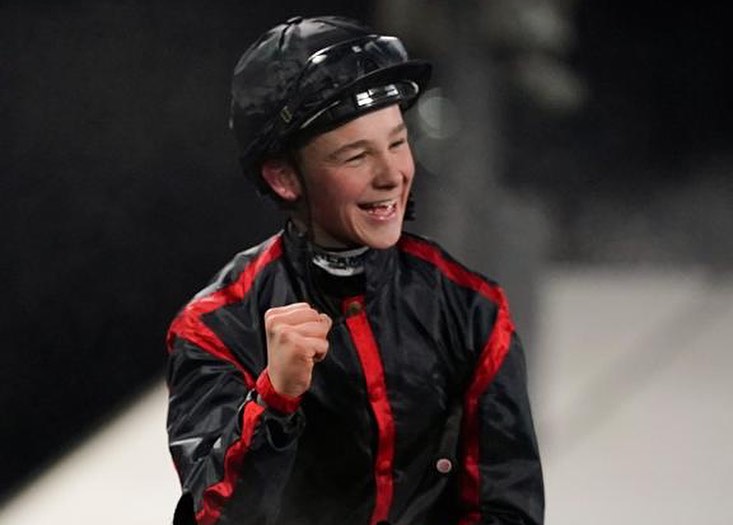
Newly crowned British Flat Racing Champion Apprentice Billy Loughnane was aboard the Mary Slack-homebred Disclosure, who finished second in a Novice Stakes event (via trainer George Boughey’s facebook page)
Mary Slack and Gaynor Rupert both had homebreds running at the Wolverhamption All Weather meeting in the U.K. tonight (Thursday) and both put in promising performances visually speaking.
Disclosure, a Wilgerbosdrift (UK) Ltd-bred two-year-old filly by Advertise out of a Desert Style maiden, finished second in a fillies Novice Stakes over six furlongs.
She is trained by George Boughey and was ridden by Billy Loughnane.
She runs in Slack’s familiar black colours, although her normal scarlet cap has white stars on it in the U.K.
Disclosure finished a 2,50 length fourth on the Newcastle All Weather track over six furlongs on debut.
She was up against a Simon and Ed Crisford-trained Blue Point filly, Rosa Applause, who was coming off an impressive debut third on the Newcastle All Weather.
Rosa Applause started 30/100 favourite with Disclosure at 10/1 in an eleven horse field.
Rosa Applause led from draw six and Disclosure managed to get over from draw 8 to race on her quarters. However, Disclosure was always chasing and was beaten four lengths. Nevertheless, she did well to beat the rest of the field by three lengths.
Earlier Gaynor Rupert ran the No Nay Never two-year-old first-timer colt Never Mind Me, who is out of a Redoute’s Choice mare who was a Gr 3 runner up in the UK and on another occasion was third in a Gr 3 to Met winner Smart Call.
The Andrew Balding-trained colt is good looking and showed a nice action. He looked to have plenty in hand when entering the straight in midfield in the seven furlong Novice Stakes event. However, he was green and jockey David Probert was unable to put him into a position with just daylight in front of him. That might have been why he just plugged on at one pace to be beaten 7,25 lengths into 6th place at odds of 9/1 in the nine horse field. Otherwise he might just have needed the outing. Nevertheless, he should put in an improved effort next time out.
Van Zyl At Fairview For Glenmore Sprint
It has been a while since Kwazulu-Natal trainer Gareth van Zyl has visited Fairview and he does so on Friday with a very interesting runner, writes Henk Steenkamp.
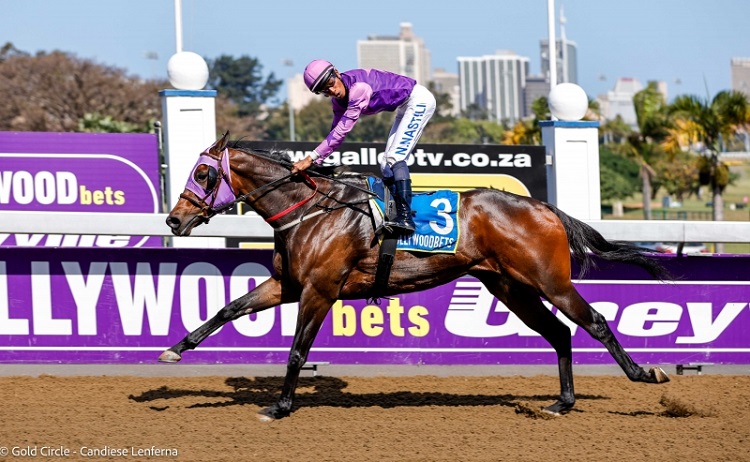
The five-year-old Flower Alley gelding Iron Bark will be contesting the feature race at the Polytrack meeting and has been priced up as the favourite to win the R175 000 Glendore Sprint (Non-Black Type) over 1000m – race seven of eight at 16:20.
Iron Bark has been impressive on the HWB Greyville Poly this year. He won his last five starts on this surface but it will be his first run on the faster running Fairview Poly.
Jockey Muzi Yeni knows his way around Fairview and does jump from pole position which is a plus for Iron Mask in his quest to continue his winning ways.
The big Fairview stables of top trainers Gavin Smith and Alan Greeff will be ready to give the visitor a warm welcome with some very speedy customers.
Slim Jannie (Smith) and Teatro (Greeff) are the biggest dangers to the favourite in a small field of eight runners.
Both these runners love the poly and are in good form. Luyolo Mxothwa will be riding Slim Jannie again and Richard Fourie is drawn right next to the favourite on Teatro.
The Polytrack should be running really fast and the pace will be on right from the start. This is not the race for the riders to lose focus – if you snooze you lose!
The meeting starts at 12:50 and the filly Enchanted Sky (Smith) should get favourite backers off to a good start in the first leg of the Bipot.
Place Accumulator players get going with the first leg in the second race at 13:25 and race three is the start of the Pick Six at 14:00.
And We Danced (Sharon Kotzen) should be too good for her opposition in the first leg of the Pick Six, a Conditions Plate for fillies and mares over 1600m.
Red William (Glen Kotzen) is the horse to beat in the first leg of the first Jackpot, race four at 14:35. The first leg of the second Jackpot, race five at 15:10, is a wide open affair.
GLENDORE SPRINT
RECENT WINNERS
2022: What A Winner
2021: Regimental
2020: Viking Moon
2019: Lord Balmoral
2018: Quinlan
2017: Omega Onslaught
2016: Scandal
2015: Villa Del Largo
2014: Insearchofthesun
2013: Insearchofthesun
2012: Never Forever
2011: Bob ‘n Weave
2010: Hear The Drums
2009: Hear The Drums


Hollywoodbets Kenilworth - A Splendid History
The new look Hollywoodbets Kenilworth is taking shape (Picture: Troy Finch)
Robin Bruss’s passion for the sport of horseracing shines through in the magnificent piece he produced for the Sporting Post about the history of Hollywoodbets Kenilworth, a great read.
In 1874, the members of the South African Turf Club chose a site on the farm Kenilworth for the construction of a new racecourse – which means that next year in 2024, the foundation of the oldest racetrack in South Africa will celebrate 150 years.
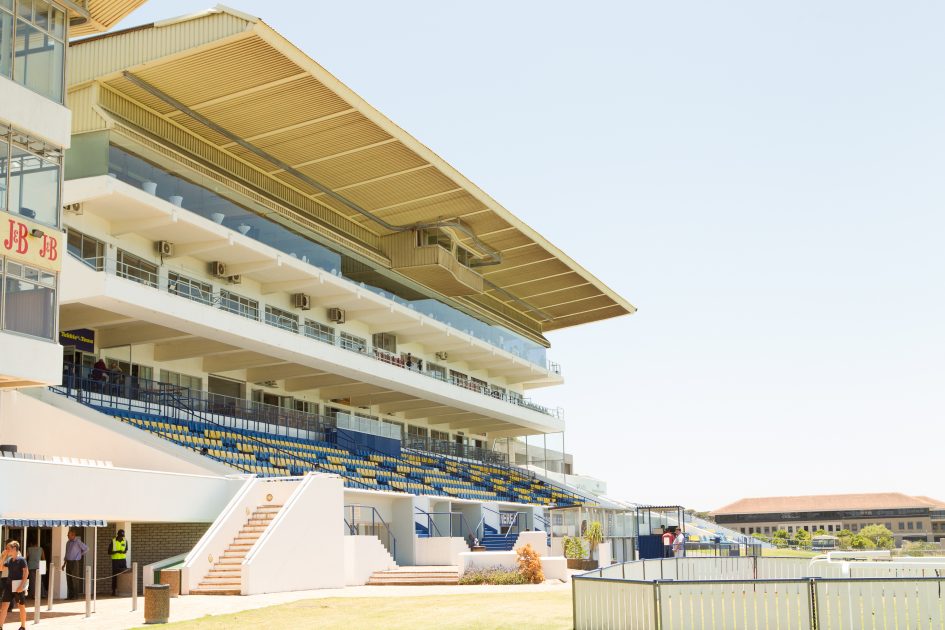
Kenilworth Grandstand, 2010 (Pic courtesy of Robin Bruss)
Robin Bruss writes that choosing a site on flat ground some 16 km from the existing Green Point track in Cape Town was a brave and inspired move because it was a fairly long journey for the public from the city centre.
However, it was encouraged by the establishment of local municipalities and the development of the railway line from the city to Muizenberg which had begun in 1859.
The South African Turf Club comprised around 40 members and already had a substantial history since it began in 1802 as the organizers of racing on Cape Town’s Green Point Common.

Met Panoramic (Pic – Robin Bruss)
Remembering our history, the first Dutch colonists arrived in 1652 and found no indigenous horses at all and needing working horses for transport and pack animals, so they began importing horses on their shipping trade routes.
Initially horses came from Java (now Indonesia) and others of Arabian strain from Persia (now Iraq), then in the 1700s the main supplier to South Africa was South America, whose origins were Spanish Andalusians. The first English horses only arrived in 1792.
South Africa was a hardy country to breed re-mounts for the military and during the 1800s, horse breeding flourished.
According to the British Bloodstock Breeders Review, thousands of Cape breds, were exported by boat in service of the British Empire.
In the Crimean Wars (1853 to 1856) the allies British, Turkey and France on one side and Russia on the other battled for control of Crimea, later to become part of Ukraine, until wrestled back by Russia in more recent times.
The bulk of the horses used by the allies were known as Cape horses – and at least 450 were killed in the ill-fated Charge of the Light Brigade, made famous by Tennyson’s epic poem : “Theirs not to reason why/ Theirs but to do and die/, Into the valley of Death Rode the Six Hundred.”
Cape horses reached Basutoland (now Lesotho) and developed into the breed known as Basuto ponies, famed for their toughness and endurance and thousands were sent from Durban to India, plus the British discovered they were better than they own breeds and purchased 30,000 for use in the Boer Wars.
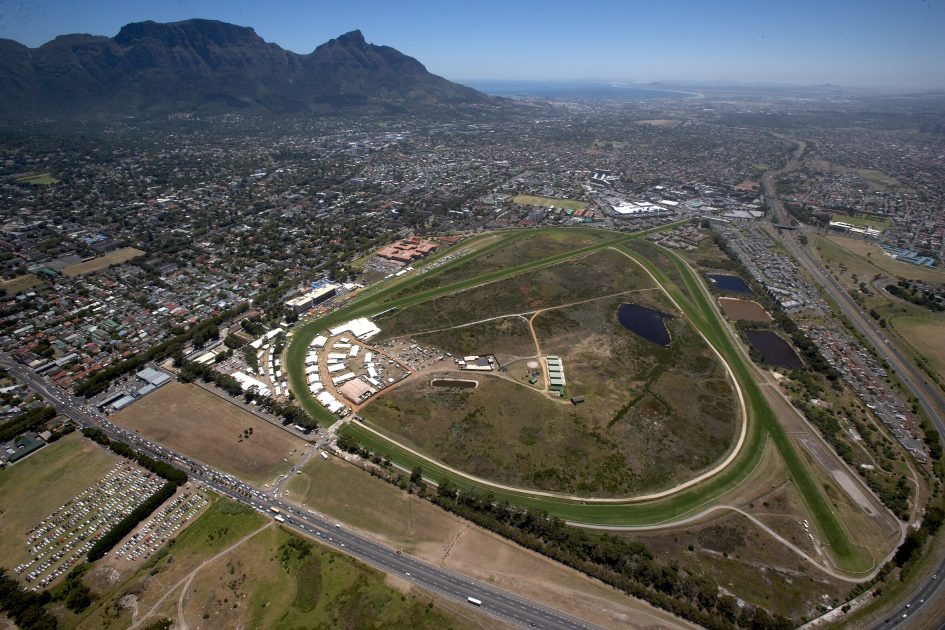
Aerial view of Met day – some years ago (Pic courtesy of Robin Bruss)
It was therefore not surprising that the Governors of the Cape would enact laws to encourage the breeding and farming of horses and as the racing of thoroughbreds became the main social sport, the Government also provided £3,000 funding for the building of Kenilworth racecourse.
The British had occupied the Cape Colony in 1795 and within two years, the first ‘African Turf Club’ was raised by the British garrison with 29 members using military horses to race against each other.
The race meetings were twice a year on Green Point Common and filled with social events culminating in a grand ball at the Turf Club House in Adderley Street.
The Green Point common was stony and unfenced and also used for grazing cattle and a flag would be raised before the start to indicate the course for the race was clear to run.
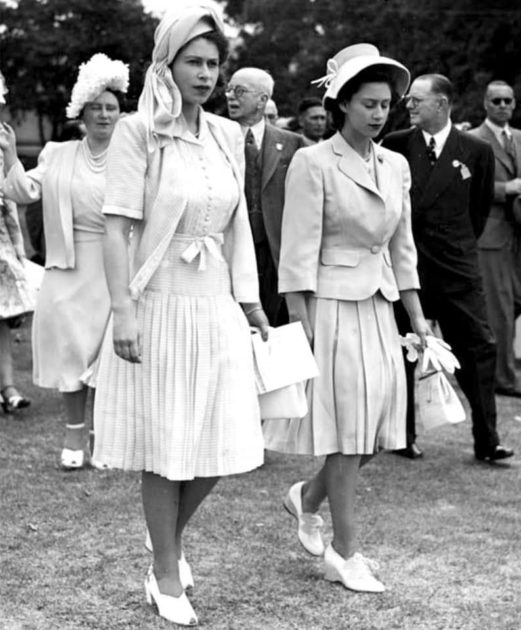
Princess Elizabeth 11 and Princess Margaret visit Kenilworth in 1947
In 1814, it was decided something more formal was required and the Governor of the Cape Colony, Lord Charles Somerset, passed laws to protect the Green Point track and replaced the soldier’s Turf Club with a new one, The South African Turf Club with 40 members of higher social standing.
Somerset imported thoroughbreds from England, started his own stud and became very successful on the turf as the leading owner.
His name is commemorated in the Somerset Plate still run today.
In 1828, the first South African Derby was run in Cape Town, later to move to Johannesburg, and in 1861, Queen Victoria donated a silver plate for the inaugural Queens Plate, which in January will be run at for the 153rd time, now the L’Ormarins Kings Plate.
Construction of the oval shaped Kenilworth racecourse was completed by the end of 1881, and the first grandstand built. The first racemeeting was held in April 1882.
The President of the South African Turf Club by then was Sir Hercules Robinson, who was also Governor of the Cape Colony, and the British High Commissioner – but also he was an ardent and active participant in racing as owner of the leading stable.
It’s probably no surprise to record that the following year, 1883, saw the first running of The Metropolitan at Kenilworth as Cape Town’s premier race and it was won by a four year old named Sir Hercules!
As towns sprang up throughout South Africa, horseracing spread to many country districts and new social Turf Clubs emerged – in Paarl, Uitenhage, Stellenbosch, Graaff-Reinet Grahamstown, Somerset West, Swellendam, George, Cradock, Port Elizabeth, Kimberly, Bloemfontein, and Natal, where the first meeting was held in 1844 in Pietermaritzburg.
With the discovery of gold on the Witwatersrand, racing began in Johannesburg in the 1880s.
The Johannesburg Turf Club was formed in 1887 and the flagship Turffontein Racecourse established in 1899. This means that in 2024, Turffontein will celebrate its 125th anniversary.
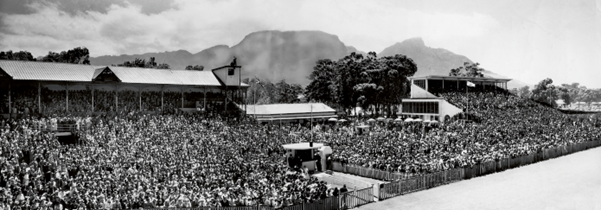
Kenilworth in the magic days of the 1930’s – look at the crowd! (Pic courtesy of Robin Bruss)
By 1900, there were more than 100 Racetracks and Turf Clubs spread all over South Africa. By early 2000, corporatization and amalgamation were the buzzwords and the Turf Clubs ceased to exist.
The Jockey Club of South Africa had been founded in 1882. The Racing Calendar recorded the results and the first General Stud Book was published in 1894.
Kenilworth Racecourse and the South African Turf Club remained important because of its concentration of horse breeding in the Cape, but gold endowed Johannesburg hosted the richest racing for the next 125 years.
It’s ironic that in 1996, some 109 years after its founding, the Johannesburg Turf Club was collapsed in favour of corporatization in the form of public company Phumelela which was listed on the Johannesburg Stock Exchange in 2001.
This caused the closure of all the Turf Clubs country wide on the grounds of being anachronistic and not needed in the modern era.
The experiment of 20 years of corporatization of the sport failed as it focused on extracting shareholder dividends from gambling at the expense of the ethos of the Sport, and the collapse of the Clubs diminished the sport’s support base.
The newly formed Cape Turf Club and the restoration of Kenilworth racecourse as a multi purposed venue now sits at the heart of racing’s re-emergence, thank goodness.
Whilst History is defined as the study of past events over time, it embraces so much more colour when we remember the great personalities that influenced and shaped events, and the great horses that graced the hallowed turf that is Kenilworth racecourse.
In the past 140 years, how many starters have raced at Kenilworth? Over a million ? And how many participants and fans have come through the turnstiles, to enjoy a day out and marvel at the spectacle and have a flutter on the outcomes!
It’s stories might fill an overdue book with exciting tales of glorious victories, crushing losses, absolute triumph as well as despair, glamour and fame, heartbreak and redemption in this amazing sport we all love.
I choose to remember just a few:
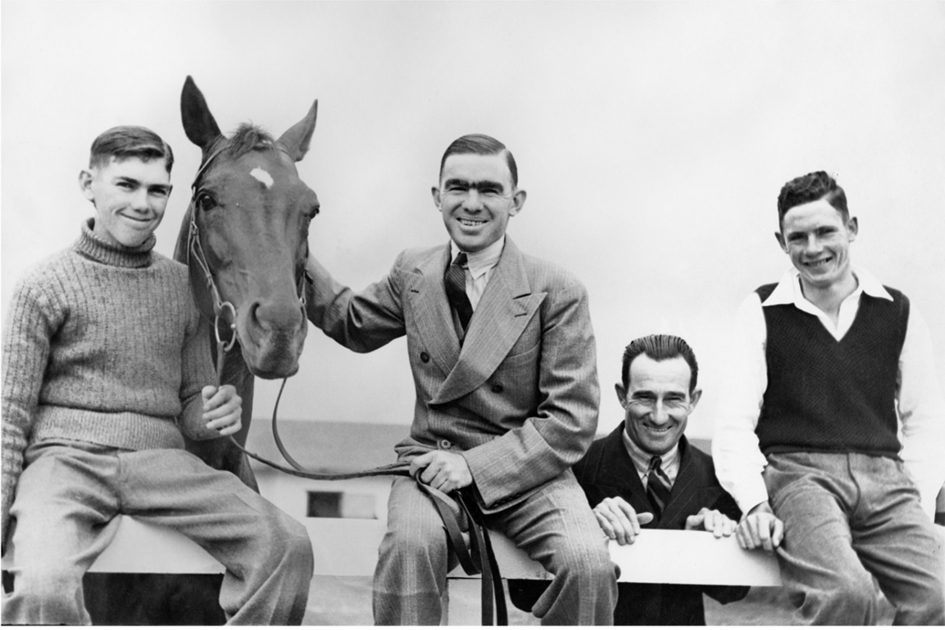
Stanley Amos, Cookie Amos, Champion Trainer Syd Garret and Freddie Hayman pictured with Moonlit, who Stanley rode to victory at Kenilworth in the Met of 1938 carrying 145 lbs
Syd Garret, uncle of future Champion Trainer Syd Laird, was known as the Wizard of ‘Roamer Lodge’ became a legendary trainer whose feats are a long way from being equaled.
He won the Met at Kenilworth 11 times as well as training four July winners, his apprentices were the Amos Brothers, Cookie, later to become a champion trainer himself, and Stanley, another legend who started race riding at 14 and continued until 65 years old, and finally retired after 72 years in racing.
In 1938, Cookie rode Syd’s greatest horse Moonlit to win the 1938 Met in a canter carrying 145 lbs (66kg), his second win in the race. In between he was 2nd in the Met by a head to his stablemate, French bred Asbestos II (FR), ridden by Stanley carrying 32 bs less!
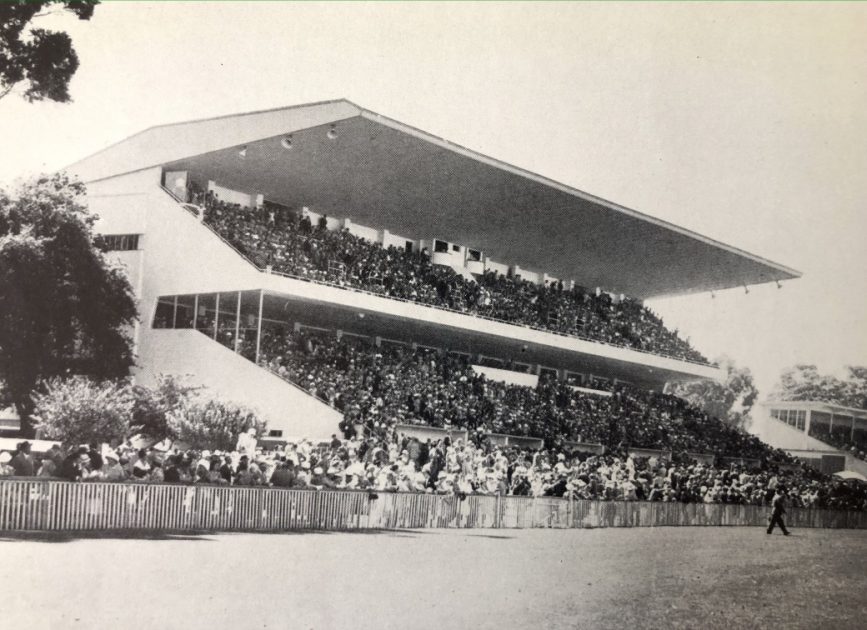
Kenilworth Grandstand in1961 (Pic courtesy of Robin Bruss)
Asbestos II later became 5 times Champion Sire in South Africa. Cookie proclaimed in an interview with Charles Faull in 1987 that Moonlit was a better horse than Sea Cottage or Hawaii or any champions of the previous 50 years.
Eight of his 12 wins were at Kenilworth and apart from two Mets, he also won Top division up the Kenilworth 6 furlong straight conceding 46 lb (21 kg) to the best sprinters of the day. Travelling out of town, he won the Durban Merchants over 6 furlongs and the South African Derby at Turffontein over 12 furlongs.
“I rode many of the great horses for more than 50 years” said Stanley, “none of them would have lived with Moonlit, the greatest of them all”.
I recall in 1983 standing in the parade ring with owner Sydney Press and Stanley Amos, then 64 years old and Sydney asked famed trainer Terrance Millard: “What qualifies this old man to ride my horse Gallantry?”. “His experience !” shot back Millard.
And then the horse came out and won !
Apart from Moonlit in the 1930s, the Syd Laird trained Sea Cottage, who won the 1966 Queens Plate and Cape of Good Hope Derby at Kenilworth amongst his 20 wins, is regarded by most as the best horse to have raced on the Kenilworth Turf.
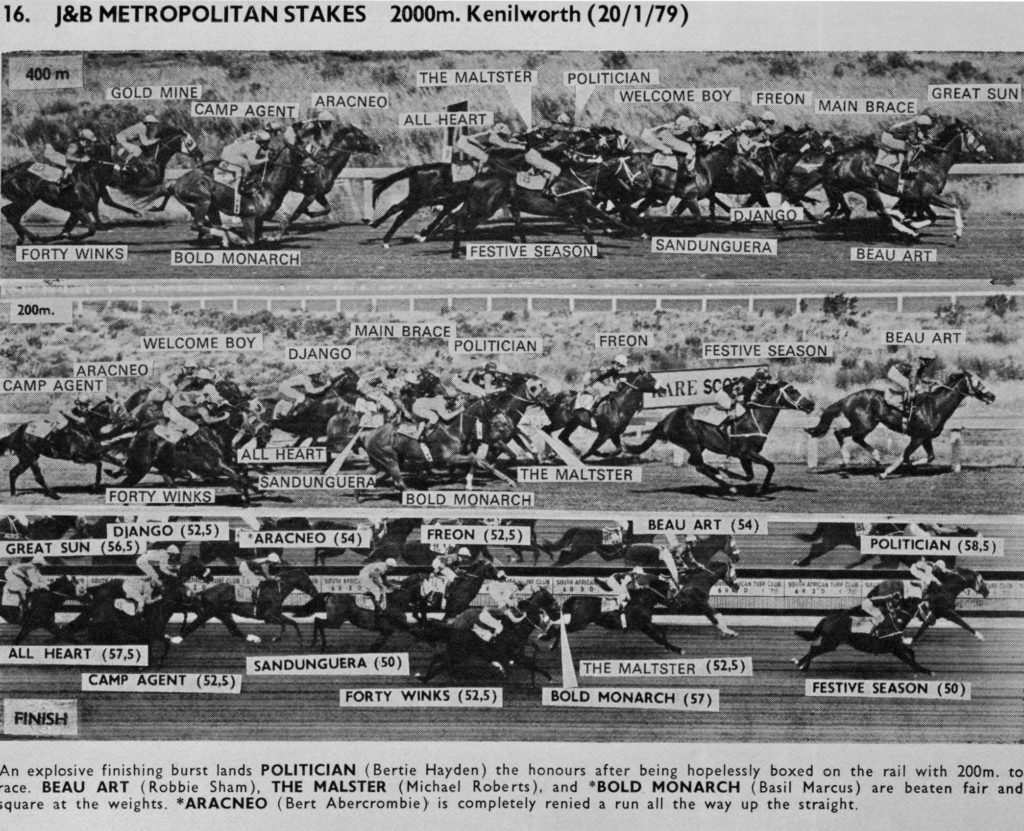
1979 J&B Met finish
I never saw him run, but I was on hand when Politician, who won 11 Grade 1 races, won the Met for the second time back in 1979.
The grandstand was so packed, I took an old wooden chair and put it at the back just under the rafters so I could stand on top and watch over the heads of the thousands who came to see Politician make history.
Trainer Syd Laird was so excited he jumped astride the horse in the winner’s box!
Foveros (1982), Wolf Power (1984), the great mares Olympic Duel (1991) and Empress Club (ARG) (1993), London News (1997) and the great Pocket Power’s unique treble for the Mike Bass stable (2007, 2008 and 2009) all remain deeply etched in the memory.
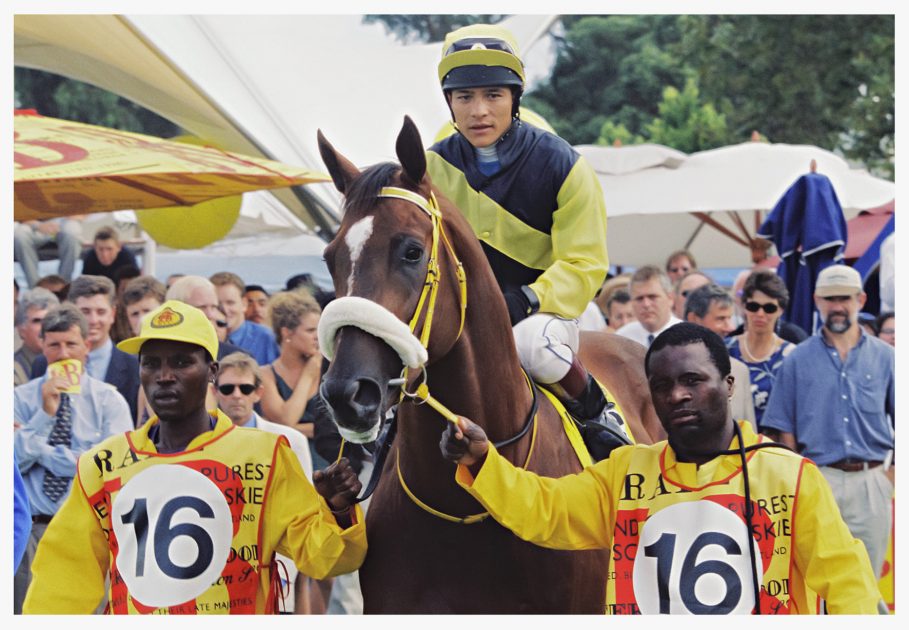
The great Horse Chestnut (Weichong Mawing up) won the 1999 Met by 8 lengths in front of 55 000 people, the all-time record attendance at Kenilworth (Pic courtesy of Robin Bruss)
Horse Chestnut’s majestic win in the 1999 J&B Met as a 3 year old by 8 lengths is the most memorable Met most of us ever saw – and I remember as part of the SABC commentary team noting that the 55,000 strong crowd was the largest ever and the gates of Kenilworth had to be shut early as the House Full signs went up.
This was Kenilworth’s heyday, and racing’s finest moment in Cape Town.
Enjoy a Horse Chestnut flashback:
Watch Pocket Power’s Met win in 2008:
Remember Igugu, who won the Met in 2012?
The J&B Met Sponsorship which lasted over 30 years was not only the whisky brand’s biggest global event, it also yielded Cape Town’s biggest social and sporting event every year with the students of UCT enjoying the biggest open air party of the year and many becoming hooked on the racing game thereafter.
Those of us who have been around a long time, miss those glory days of racing, packed stands and public adulation of the horses.
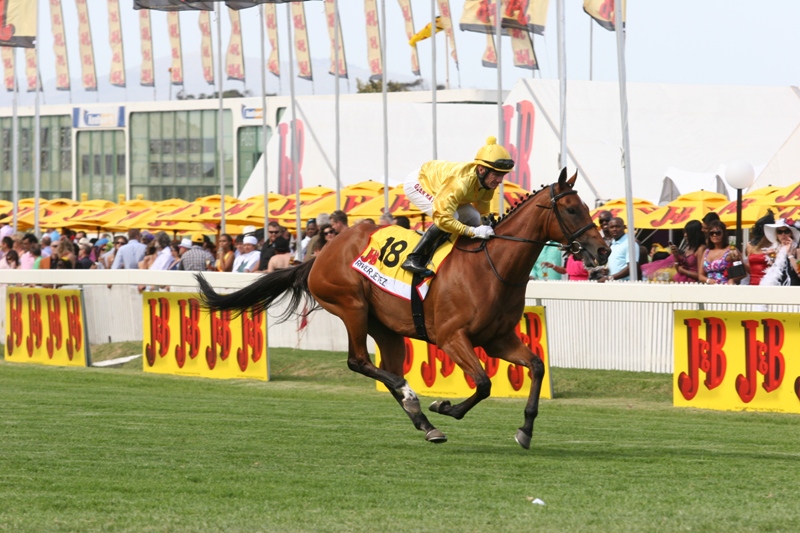
River Jetez – 2010 Met winner
But in witnessing the tour de force that is Greg Bortz and his team at Cape Racing, with the incredible support of Hollywoodbets and L’Ormarins Kings Plate and other sponsors, it is a sense of excitement and pride that ripples through all of us as we head into the 150th anniversary of its founding, in the sure knowledge that Kenilworth’s best days are on their way back.
Mayhew, Habib Doubles
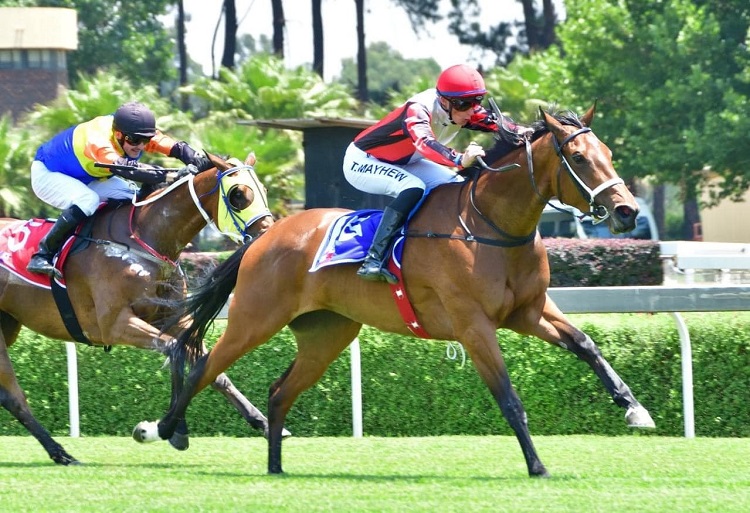
Trent Mayhew won the first race today aboard Spirited Girl, a Ridgemont-bred Canford Cliffs filly who is trained by his father Craig Mayhew (Picture: 4Racing)
Trent Mayhew rode a double at the Vaal straight course today and Fabian Habib saddled a double.
4kg claimer Mayhew, who opened the day by winning on a horse trained by his father Craig, is now on nine wins for the season achieved at a strike rate of 8.74%.
Habib goes to 17 wins at 14.17%.
Today’s Question
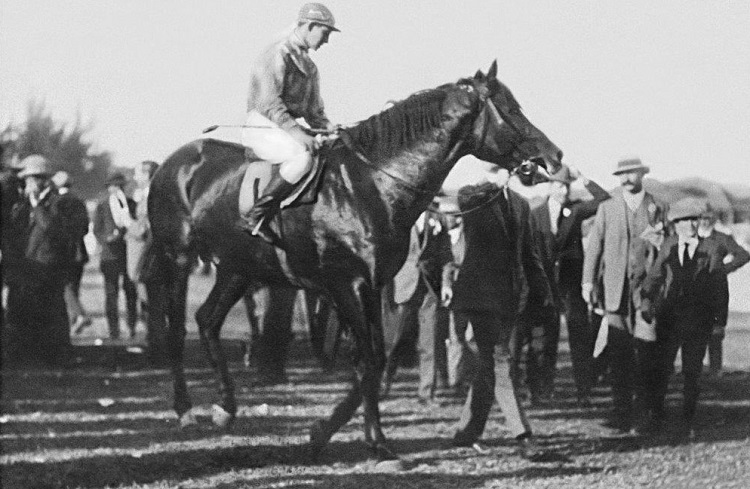
The horse in question is pictured above with 18yo Syd Garrett in the irons (photo: Form Organisation)
Which dual Durban July winner and Johannesburg Summer Handicap winner sired a winner of the Johannesburg Autumn Handicap.
Weekend FIELDS
Fairview Poly Fields, Friday
Today’s Question Answer
Turf Talk
The British-bred Pamphlet (William Rufus), trained by Jim Russell, won the Durban July in 1918 and 1920, ridden by C Bowles and Syd Garrett respectively. He had won the Johannesburg Summer Handicap in December 2017. He went on to sire Johannesburg Autumn Handicap winner Pavlova, who beat the like of July winner Glen Albyn when winning the latter race in 1931.
South African racing aficionado Charles Faull spoke about Pamphlet in an interview with the Sporting Post a few years ago.
Faull called Jim Russell “perhaps the greatest horseman this country has ever seen Pamphlet one of the greatest horses ever to tear up the sods on South African turf.”
Charles meticulously pieced Pamphlet’s story together from old racing calendars, newspaper clippings and first hand stories from Stan and Cookie Amos, who were apprenticed to Syd Garrett. Syd Garrett once said, ‘There are good horses, there are top class horses, and then there’s Pamphlet and Moonlit. I trained many top class horses, world-class in fact, but none of them were within a stone of Pamphlet and Moonlit.’ What makes Pamphlet such a great horse is that he consistently outperformed WFA terms.
Pamphlet was bred in England by Mr J Musker and raced in Ireland as a 2yo for two places from 5 starts. Described as “A horse of abnormal power and size”, Pamphlet caught the eye of trainer Jim Russell and was purchased for his client Mr Briton in 1915.
Pamphlet was by William Rufus out of a St Simon mare and Charles explains, “In those days the impetus was on bringing good horses in from England. Thanks to the likes of Randlords like Jim and Solly Joel and Abe Bailey, we imported as many as a 100 good English and French horses every year to race in South Africa. We’re talking sons and daughters of world class stallions, particularly prior to World War II so we were seeing the best the world had to offer.”
“Russell’s horses were never pushed before they were ready. Many were allowed to remain entire and most only reached their greatest achievements after they were fully physically mature. Charles’ father was the great horse vet, George Faull and he recalls, “My father used to say “What you leave alone in the beginning you get back 10 fold in the end. Jim Russell lived by this and it was this patience and foresight that gave us the mighty Pamphlet.”
Pamphlet started his SA campaign at 3, going to post 10 times, mainly over sprint distances, mostly finishing out of the money. As a 4yo, Pamphlet had another 10 starts. His first few runs were over sprint distances and he was sent postwards at long odds. However, on 18 November 1916, he lined up for a warm favourite for a 10 furlong bottom division handicap at Milnerton and duly cantered home. “He could read and write, this horse,” chuckles Charles. “When the money was down, he produced the goods.”
Russell’s giant finally started coming into himself as a 5yo. “This is where the fire started,” confirms Charles. After wins in Durban and Cape Town, Pamphlet won the 1917 Summer Handicap at Turffontein on 22 December. Four days later, he contested the two mile Transvaal Handicap, conceding 23lbs to finish 3rd (“a serious run,” interjects Charles) and a week later, he ran again in the Goldfields handicap, finishing 5th under E. Shaw. After dead-heating for 2nd in the Winter Handicap, Pamphlet headed south for the 1918 Durban Handicap. Starting 3-1 favourite under a good weight of 122lbs, Pamphlet obliged by 1.25 lengths.
Four days after his July triumph, Pamphlet contested the Grand Stand handicap as even money favourite, and conceding 32lbs over 2800m, was beaten a head and a neck into third. Incredibly, Russell sent him out yet again on 13 July in the 3200m Berea Handicap. With a young Syd Garrett in the irons, Pamphlet finished a short head second to Renegade, conceding 28 lbs.
On 10 August, with Garrett in the saddle again, Pamphlet ran in the 3200m August Handicap, where he conceded a staggering 51lbs to be beaten into third by 1.75 lengths. The fully grown Pamphlet reportedly stood at 17’1hh. “You’ve got to picture this young boy, riding this massive horse. Garrett rode at around 98lbs at the time, so had to carry 30lbs of dead weight!”
Syd Garrett partnered him for the rest of his 6yo year, in which he ran excellent places in the Champion Stakes, Jockey Club Stakes, Germiston Handicap and Natal Handicap, always carrying – and conceding – welterweights.
As a 7yo, Charles says with satisfaction, “he really hit his straps.” Conceding 47lbs, Pamphlet was 1.25 lengths second at Greyville on 2 August and then contested the 1918 Met, going down half a length to dual Met winner, Battleplane, conceding 26lbs. He won the Suburban Handicap by half a length, conceding 37lbs to Barnstormer and then finished 1.25 lengths second to Polychromy in the 1919 Summer Handicap. “Polychromy was by world champion sire Polymelus and owned by Sir Abe Bailey – what strong connections SA had to the world’s best.”
On 1 January 1920, Pamphlet won the Champion Stakes by 1.5 lengths giving away 2 stone to second placed Relish. Three weeks later he placed in the Benoni Jockey Club Stakes. After a short break he was back in April, finishing 4th in the Johannesburg Autumn Handicap before contesting the Jockey Club Stakes a week later, conceding 25 lbs (and carrying 15lbs more than WFA) to win by a neck.
Carrying 9st 8lbs, Pamphlet won his second July on 3 July 1920. The second highest weight in the field that year was Polygamist (another son of Polymelus) carrying 7st 9, a difference of nearly 2 stone.
Pamphlet wins the 1920 Durban Handicap (photo: Form Organisation)
PAMPHLET and 18 YO Syd Garrett defy 134 lb and a massive weight concession to the whole field to win by almost 3 lengths from the worst draw in the 1920 Durban July (photo: Form Organisation)
To cement his brilliance, one week after the July, Pamphlet contested the Berea Handicap over 2 miles at Greyville. Carrying 10st 8lbs and conceding 52 lbs, Syd Garrett rode him to victory over the top class 4yo Tower Bridge (6st 11) by a length.
Pamphlet then retired to stud, but unfortunately failed to live up to expectation.