



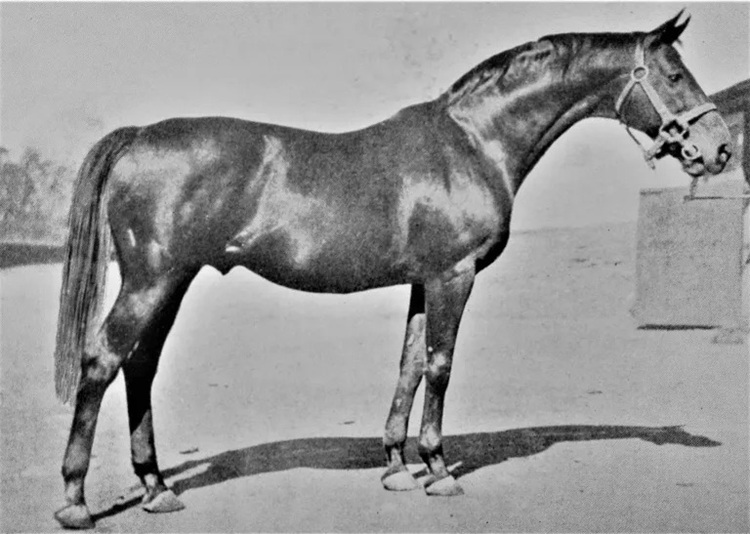
GREATOREX (1900: Carbine – Mrs Butterwick by St Simon), an impeccably bred horse by the great New Zealand-bred Melbourne Cup hero Carbine out of an Oaks winner. He was a leading juvenile in England, but wind problems curtailed his racing career which included being at a short price for the 1903 Epsom Derby. He led the South African Sires List for ten seasons from 1910/11 to 1913/14 and 1916/17 to 1920/21. He was in the top three for thirteen consecutive seasons from 1909/1910 to 1920/21. He stood at the famous Dwarsvlei Stud of Henry Nourse. Today’s successful SA-bred Gr 1-producung stallion Act Of War has Greatorex’s dam Mrs. Butterwick as a bottom line female.
The late racing guru Jay August rejuvenated a lot of past articles on to an online site and these have become valuable archives.
With Heritage Day falling on Thursday this week it is appropriate to publish this article about South Africa’s earliest racing history as described by the late, great administrator, owner, breeder and world renowned authority on thoroughbred bloodstock, Allan Robertson.
by A.L. Robertson – SA Bloodstock Breeders Review 1945
The first recorded race meeting in South Africa was held at Green Point Common near Cape Town on Monday the 18th of September, 1797, and was won by Colonel Hope’s brown horse Zemman Shaw, a five-year-old who, starting at 5 to 4 on, launched the indefatigable army of punters to a winning start. The races were run in heats as was the custom in Europe in those days, and the race won by Zemman Shaw was the final of the Turf Club Purse, a weight-for-age event, value 60 pagodas in the currency of those days. The contestants were not Thoroughbreds and their daily avocation was no doubt under saddle or in harness.
 Allan Robertson
It was not, however, till the despotic Lord Charles Somerset arrived in South Africa as Governor that the racing of Thoroughbreds was established and in 1814 he appears to have been instrumental in getting certain Rules and Regulations laid down to govern the races held under the auspices of the South African Turf Club, which exists to the present day. These “Rules and Regulations” were the prelude to the present Jockey Club of South Africa which, however, came into existence at a much later date.
Membership of the South African Turf Club was limited to eighty and was open to Officers of the Navy and Army and respectable Inhabitants of the Colony. Six years later in 1822 the Burgher Senate, the first Parliament of the Cape, donated a purse value 400 Rix- dollars for the Annual Autumn Races for Horses bred in the Colony. In addition, a very handsome floating trophy was presented by the Burgher Senate.
About this period race-meetings were being held in other centres. Paarl started in 1815, followed the next year by Uitenhage and Stellenbosch. Five years later in 1821 there was a race meeting at Graaff Reinet, two years after that in Grahamstown and in 1825 Somerset East and Swellendam followed suit and George was added to the list in 1827. The moving spirit in Graaff Reinet was Sir Andries Stockenstroom whose descendants still live in the Eastern Province.
A COMPLETE CHANGE
Despite these country meetings, racing was only carried on with some regularity at the Cape, but with the discovery of diamonds and gold there was a complete change in the racing venues. With Port Elizabeth the nearest port to Kimberley, that seaside town prospered and the Port Elizabeth Turf Club became the premier racing club in what was later to become the Union of South Africa, and the Headquarters of the Jockey Club of South Africa was in that centre.
On the 17th of October, 1885, the first South African Derby, value £400, over nine furlongs, was run at Port Elizabeth and won by Mr. H. Hilton- Barber’s b.c. Oxygen by Plunger out of Ozone, who started at 7 to 2 on and won from Mr. P. J. Marais’s Quidnunc by Student and Mr. F. J. van Zyl’s Reliance by Agar. The winner was ridden by “Curly” Longhurst, the father of C. L. Longhurst who, in July, trained St. Seiriol who won the latest Durban July Handicap.
Oxygen was bred in the Western Province by Mr. J. A. Faure. His sire the imported horse Plunger was by Adventurer out of Linn, by Stockwell, so bred in the purple, while his dam Ozone was by Mercury. Plunger was by Adventurer out of Sophia Laurence by Stockwell. It was this meeting that the “Tote” was first operated. On the first day when it was a rather mysterious new invention only £700 passed through the machine, but on the second day this was doubled and on the third day nearly trebled, so that about £4000 was handled.
Jockey Club decisions and reasons were published in the “Racing Calendar, Sporting Journal, and Breeders’ Gazette,” a fortnightly journal which, as its title indicates; was the official organ of the Jockey Club as well as a sporting newspaper. It was certainly much superior as a racing journal to anything now published in this country. In the correspondence columns one finds most of the same controversies that rage at present, such as arguments for and against a Board of Handicappers, the severity of Jockey Club penalties, the sins of commission and omission of jockeys and others.
About this time there was much racing in the country districts and one finds in 1886 no less than £720 distributed over a two-day meeting at Aliwal North, £700 over the same period at Bedford and even unpretentious little Sterkstroom gave stakes to the value of £300 for a one-day meeting and at Barkly East £400 was distributed over two days.
JOHANNESBURG TURF CLUB
With the discovery of gold in the Transvaal, horse racing soon made its appearance in that Republic, and the Johannesburg Turf Club held its inaugural meeting on the 15th of June, 1887, described in the “Racing Calendar” in the following terms:
The first Johannesburg Handicap was won by Mr. A. T. Allison’s br.h. Second, a five-year-old, carrying 9st 61b. The Chairman of Stewards was the famous Landrost of Johannesburg, Captain von Brandis, while among the Stewards were Mr. Jan Meyer whose son breeds horses in the near vicinity of Johannesburg. There was also the subsequent mine magnate, Sir George Farrar (then plain Mr. Farrar), the well-known Col. Ferreira and Messrs. We Wainwright, J. G. Maynard, W. de Vos, J. Gammie, W. Green, W. K. Dow, H. Baillie, C. T. Ross, G. du Fred Barber (of Barberton fame), M. Donovan, S. Fox, D. J. Morton and J. S. Harrison.
The rise of Johannesburg as the chief racing centre coincided with the diminution of racing in the smaller country towns, who have never again been able to establish themselves on any regular basis. Racing never really took hold in the Orange Free State as in other purely rural areas, though Bloemfontein has usually managed to keep going on a modest scale. It is interesting to note that one of the early Stewards of the Bloemfontein Turf Club was Mr. M. T. Steyn, who subsequently became President of that model Republic, and is the father of Dr. Colin Steyn, the present popular Minister of Justice.
A SERIOUS THREAT
The first real fillip to the production of Thoroughbred horses occurred when that Martinet Lord Charles Somerset was appointed Governor of the Cape. His idea of a Governor was to “govern” and this idea he implemented to the full, falling foul of those he governed. One of his passions was horse breeding and horse racing, and it is to his credit that he did much to establish both in his Colony. He imported the stallions Kutusoff, Cottager, Cricketer, Vanguard and Walton and was accused of taking advantage of his position as Governor to sell horses to the Government imported by himself. What he is to be commended for was the fact that in racing, his influence was constantly exercised in making the sport a means of improving the breed.
My Lord. In answer to Your Lordship’s Dispatch of the 14th December I have to state that altho’ Horse Racing has existed in this settlement during the last eighteen years it is not carried, as Your Lordship has been given to understand, to any considerable extent, altho’ my predecessors in this Government (and particularly Sir John Cradock, I am informed) thought it expedient for the improvement in the breed of horses to give it every encouragement.
I am happy to inform Your Lordship that I find from the most minute enquiries, that since I have been in the Colony no tendency whatever to a spirit of gambling has existed. Should any appear, Your Lordship may be assured that I shall of course discountenance it by every means in my power.
The Horse Racing here remains upon the same footing it did during the administration of Sir John Cradock, and it is evident that it has contributed greatly to the Improvement of the Horses in the Colony, which is very peculiarly adapted to the breed of the animal. If however it be the pleasure of His Majesty’s Government to direct that Races shall be altogether forbidden, I shall be ready to obey Your Lordship’s Instructions on that head, although I am of opinion that such a measure would be extremely disadvantageous to the Interests of the Colony, and give great dissatisfaction to the Dutch Landed Proprietors.
Thus ended the first serious threat to the continuance of racing in this country, due perhaps to the Governor’s reassuring statement about the prevalence of gambling, at a period when bookmakers did not operate and all bets were between individuals.
One of the first Thoroughbred mares imported was Miss Whipthong in 1815. She was a granddaughter of Editha, the maternal ancestress of the great racehorse and sire Galopin (sire of St, Simon), and there are direct descendants of her still at stud in South Africa, for Magic Maid standing in the name of Mrs. C. M. Beckett, goes all the way back in tail female to Miss Whipthong.
THE EARLIEST STUDS
The earliest Thoroughbred Studs were in the vicinity of the Cape where the Melcks, Van der Byls, Cloetes, Versfelds, Van Bredas, and Kotzes bred the best horses of those days. Later on these breeders were hard put to hold their own against the new studs springing up in the Cape Eastern Province, where H. van Zyl at Hanglig and Mr. D. J. Oosthuizen at Vlakfontein both in the Hantam ward of Colesberg bred some of the best horses of the day, and to all intents and purposes put the Western Province breeders out of commission. These breeders imported very good sires but relied on mares on mares of their own breeding, so they were in turn superseded by breeders like Mr. Hilton Barber at Halesowen in the Cradock district, Mr Charles Southey at Culmstock in the Middelburg district ad Mr Alex Robertson at Stormfontein in the Colesberg district, while in the Orange Free State Mr. Frans Schimper in the Winburg district was turning out good horses.
About this time too Mr. Arthur Forbes founded the well-appointed Temple Farm Stud in the Middleburg district and in the Dordrecht district Mr E. V. Birch started on his Vogelvlei Stud which has risen to be the present premier Stud in the country.
In the Robertson district Mr. Danie de Wet also started making his presence felt at the Prospect Stud where his sons are successful breeders to the present day.
Despite various setbacks such as the First World War and the subsequent economic depression, the production of Thoroughbreds has continually developed and has received considerable protection from the Union Government and from the Jockey Club of South Africa. During the period of the Second World War no importations were possible after 1940 so that the local products have had the full advantage of the inflated prosperity which has obtained, and the result has been a record crop of new breeders all over the Union. How many of these will survive as serious contenders in the best class, remains to be seen, but inexperience, unsuitable horse country and inferior breeding stock will doubtless take a heavy toll in the not-too-distant future.
Allan Robertson (1889-1974), the author of this short article, was a prolific writer and administrator who helped form the modern period in South African racing. He wrote a series of articles titled “Giants of the South African Turf” which surveyed the best horses to run in South Africa from 1900 to 1954, and which is the only such survey ever written. The premier two-year-old race, the Allan Robertson Fillies Championship is run annually at Scottsville in his honour. The following was his obituary in the 1974 Bloodstock Breeders’ Review.
ALLAN ROBERTSON was one of the world’s foremost authorities on bloodstock. Not only did he enjoy world acclaim, but in his own country he was Life President of both the Jockey Club and the Thoroughbred Breeders Association, a demonstration of the respect in which he was held.
Born at Colesberg in 1889, Robertson was educated in England. In his youth he won a competition, internationally contested, and sponsored in Britain, judged by William Allison (the Special Commissioner of the Sporting Life). This brought him to notice beyond the borders of South Africa and he was invited to become a member of the International Racing and Breeding Organisation, with its headquarters in Rio de Janeiro.
Robertson served as the Head Executive of the Jockey as we Club of South Africa for 40 years, was chairman of that board there and then life president. In 1921; he founded the Thoroughbred Breeders Association of South Africa, himself serving as secretary. He was then elected chairman, a post he held for 40 years before becoming life president.
Robertson was a well-known contributor to the leading bloodstock journals of the world, including the Bloodstock Breeders Review. He married Louie Oosterhuizen of Vlakfontein Stud, where their only son Alex is now a highly successful breeder.
N.B. Allan Robertson bred the 1957 July winner Migraine and his son Alex bred the 1961 July winner Kerason and the celebrated 1973 July winner Yataghan, who is one of seven horses in history to win both the July and the Met. Alex’s son HA McLean Robertson was the woner of the 1982 July winner Jamaican Rumba. (Editor)
