



Picture: orequine.com
Many questions have arisen about the use of bicarbonate soda in racehorses and the measuring of TCO2 (total carbon dioxide) that has been associated with it’s use.
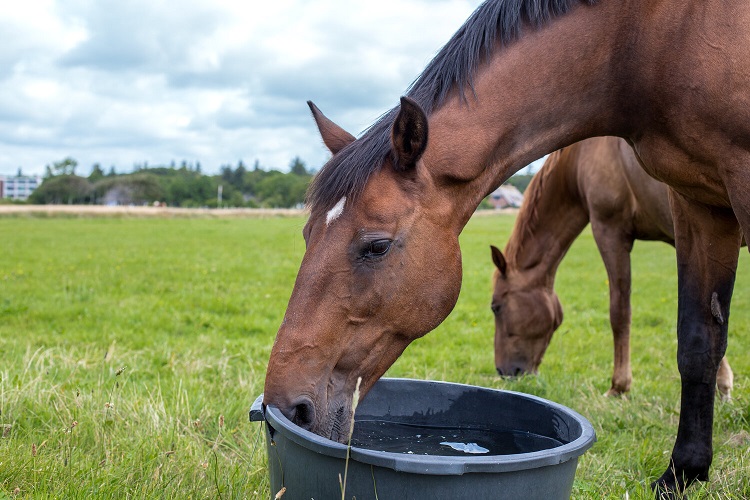
It has emerged during these discussions that putting a scoop of bicarbonate soda in the drinking water of a horse after a work out has been a decades long horseman’s remedy and is apparently not limited only to thoroughbred horseracing.
The only reason for this being done is for the purposes of recovery because it helps to remove the lactic acid from the muscles.
Bicarbonate soda is not a drug and is freely available for anybody to buy in a supermarket.
A horse who gets muscle soreness is said to have “tied up.”
Many young trainers of yesteryear were apparently advised by experienced older trainers that when a horse tied up after excercise the remedy was a scoop of bicarbonate in the bucket of drinking water.
Bicarbonate soda adminstered in this way does not have to be registered in the veterinary register.
One veteran trainer said bicarbonate soda used in this way is known to only be in the body for an hour or so and can in no way enhance a horse’s performance for a forthcoming race.
Another trainer said a horse would never be able to drink enough water or eat enough food with bicarbonate soda administered in this way to get it up to the threshold level.
One of the reasons is bicarbonate soda is not nice to taste and a horse would unlikely want to drink enough of it to register a significant reading.
One veteran trainer said he regularly administered bicarbonate soda in this way as close as two days before race day.
He said his general practice for a race on Saturday was to give a horse a last sprint up on the Thursday beforehand and a scoop of bicarbonate soda would be put in the water after that workout. As stated earlier this is purely for recovery purposes.
He said he had never hidden his use of bicarbonate soda.
In his yard there was always a container of bicarbonate soda for everybody to see.
The administration of sodium bicarbonate (bi-carb) in the hours prior to racing, is viewed by the International Federation Of Horseracing Authorities as performance enhancing.
In the practice widely known as ‘milkshaking’ the bicarbonate soda is commonly adminsitered via the insertion of a naso-gastric tube between 3 to 5 hours prior to a race.
The veteran trainer spoken to above said the practice of “milkshaking” had completely different motives and he hastened to add that he would never know how to even put a tube in a horse’s nose let alone administer a solution through it.
He did not know of any trainers who would and said it would likely have to be done by a qualified veterinarian.
“Milkshaking” apparently has another motive other than just reducing lactic acid. It is also said to mask the presence of drugs in the system.
