Fourie Barometer 369 (updated on 06/05/2024)

Rivalland's Fruitful Meeting With NHA Re TCO2
Tony Rivalland (picture above), representing trainers as chairperson of SANTA (National Trainers Association), said he had had a fruitful meeting with the NHA today (Monday) on the issue of TCO2 testing, which caused three scratchings over the weekend, with one of them leading to a big racemeeting at Hollywoodbets Greyville being abandoned.
The outcome of an earlier meeting with the NHA about the issue was that there had been an agreed concession that despite an international norm of a 36.0 mmol/L threshold level for TCO2, in SA the threshold would be raised one point to 37.0 mmol/L.
Today’s meeting was called due to a request from some trainers that it be upped to 38 mmol/L.
However, Rivalland emerged from the meeting happy to concede that 37 mmol/L was the right way to go.
He added, “At this point in time no trainers will be fined when their horses are scratched for being 37 or over. There is no penalty at the moment because obviously at this stage maybe some of these horses testing 37 or slightly over are not being intentionally “milkshaked”. There is something that is causing a higher than normal alkalizing effect in the horse and there will be road shows taking place over the next month whereby the NHA will convene meetings with trainers to explain to them why there are no fines at present and discuss the possible reasons for inadvertently high levels of TCO2. He said sometimes they will inform the trainer if it is above 35, just so the trainer is aware that something that is inadvertently in the feed, or something that the horse may have been given, could have caused it. However, information that is not breaking rules is never published.”
He continued, “So at this stage I am happy to concede that 37 is the level at which they will scratch horses. All this data has been reviewed and it will be reviewed again in the future. I think it was a productive meeting and I think they are addressing the matter reasonably, because there are no penalties for being above the limit at this stage, although obviously the penalty is that the horse does not compete in the race.”
He added, “So I feel it is fairly positive. I think the trainers will accept it. I will be sending them a letter with a bit more detail about what took place in the discussions and about the road shows.”
He continued, “There have been a lot of horses tested and there are only a very few of them who have been over the limit. I think six horses have been scratched in total since they have been doing it and they have data right from last year.”
Rivalland said he did not believe any “milkshaking” had occurred for the horses that were slightly above the threshold.
He added, “For the ones who were a bit more above it is possible there was an alkalizing agent given. Whether it was intentional or inadvertent based historically on what trainers were used to doing going in to a race, is why there is no penalty. So I think that is a reasonable approach. It gives the trainer an opportunity to review his or her feeding methods or any natural method or regimes that he or she has been using going in to a race and to make adjustments to it.”
He continued, “There will be penaties at some stage in the future otherwise it is pointless doing the test and that should act as a further deterrent to the trainer who is misguided in his or her approach into bringing a horse into a race.”
Rivalland said that most horses suffered from a form of excercise-induced pulmonary hemorrhage (EIPH) (defined as detection of blood in the airways of horses after strenuous exercise).
He said, “Worldwide trainers administer substances that can help dehydrate a horse slightly going into the race. It is possible that the substance used to help dehydrate the horse to prevent EIPH are possibly being used incorrectly and at the wrong time. When horses dehydrate it is possible for them to have higher TCO2 levels than what they would normally have. That for me could be the explanation for some of the higher than expected levels. In America some states allow the use of furosemide (lasix) at race time and it has been shown to cause levels of TCO2 1.7 mmol/L above the normal threshold and they can be as high as 39. Those states allow a higher threshold level for TCO2.”
Tony continued, “In South Africa lasix is not allowed at race time, so we generally use a lot of homeopathic stuff before the day of the race, but it still causes the horse to dehydrate. Possibly some trainers may be witholding water too long, they maybe just slightly overdosing this homeopathic remedy and it could be causing slightly elevated TCO2 levels … but that is why they are not fining at present. That was appropos our agreement from the beginning that the horses would still be scratched, because they are following the IFHA’s thresholds.”
He continued, “So they have now given us a one point leeway, because the international threshold is actually 36. However, some trainers asked for it to be two points higher on 38, but at today’s meeting they showed me all the data. They couldn’t show me how all the horses tested because that is private information, but each horse had a number and what their bicarb level was. So I wouldn’t know which horses they were or which trainers, but clearly the horses with these higher TCO2 levels definitely performed well every single time. Not every one won, but a lot of them peformed very well. So that is whey they started doing this.”
“Overseas they have caught trainers doing milkshaking and they have been suspended. But it is not so easy to catch them. The problem is when you take a blood test the TCO2 level deteriorates very quickly after 12 hours, it dissipates in the blood, so that is why they are doing on course testing, because then it is being tested realtime.”
He added, “Normally what happens with milkshakes or Alkalizing agents is the trainers who are cheating are fully aware of the efficacy of what they are administering and you will find that they administer it at a time where it will be peaking at the time a horse is going to race. That is what gives the horse the advantage. All it is supposed to do is reduce the onset of fatigue or delay the onset of fatigue. But now there is evidence to suggest that bicarb has caused some horses to run worse. Just because they have higher bicarb levels doesn’t mean they race better. However, bicarbonate of soda can disguise other drugs in the system, because what happens is the horse ends up in an alkolitic state instead of acidotic or normal PH state, and that alkolitic state is what causes the masking of other drugs tested for.”
There has been the question of the handheld blood gas analysers not being calibrated properly.
Rivalland said, “If I looked at the data and the way they tested for the first month, then it is difficult to believe the machines are not being calibrated correctly. I’m no expert in them and I can’t say 100% for sure there is margin for error in them, but if they have all that data and only six horses have been scratched I think that is pretty reasonable if I look at how many hundreds of horses have been tested and if you look at where the average level lies. Don’t forget they have also correlated that data with blood samples that have then been sent away and when the blood samples are sent away the level drops slighly, but the diminished level correlates very closely to the on course level.”
He concluded, “But they are giving trainers the benefit of the doubt, they really are, and they agreed with me the first time to give us a point over. So to go another point … it must be remembered that we want to ensure the integrity of our product. We want to make sure that the Graded races that horses win in this country can stand scrutiny in the rest of the world. If we are now going to export horses overseas and horses that have won some of these Graded races have possibly had some help that they would not otherwise be able to get overseas, they are not going to be able to perform to the level expected of them and people who have paid big money could turn around and say what is the point of buying horses from South Africa, because it is all a hoax. It could ultimately effect the value of our bloodstock.”






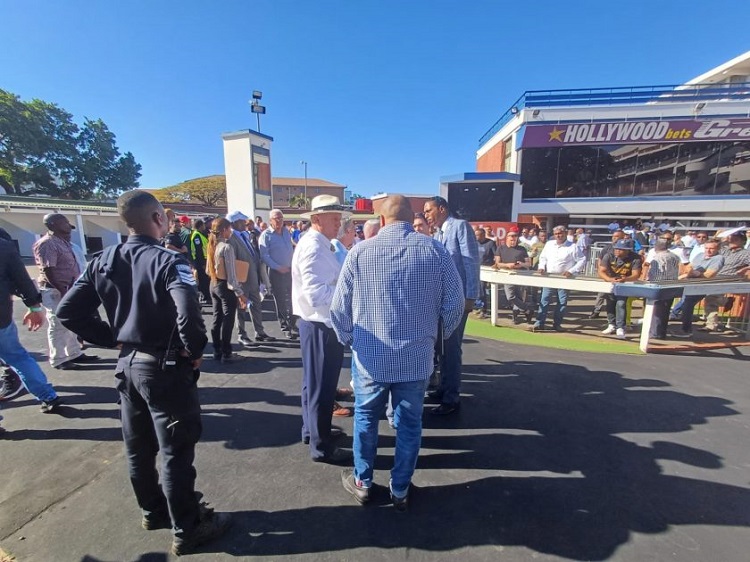
Saturday's Dark Day Raised Question Marks About TCO2
The exit to the parade ring was blocked on Saturday by protestors (Supplied)
It was a dark day in South African racing on Saturday as the Champions Season’s always much anticipated opening meeting had to be abandoned after an unruly mob blocked the exit to the parade ring before the first feature race of “the season”, the Gr 2 IOS Drill Hall Stakes.
The controversy revolved around the scratching of the hot odds-on favourite Main Defender after being tested to have elevated TCO2 levels.
It is alleged that the level was initially 39 mmol/L and had later risen to 41 mmol/L.
The question of how it could have risen in what was alleged to have been ten minutes by two points was part of the reason for the ensuing controversy i.e. was the testing procedure or machinery flawed or not calibrated correctly?
Connections of the Tony Peter-trained favourite were allegedly among the protesters and they were allegedly joined by punters, who were irate that with one of the meeting’s Pick 6 bankers now scratched they would have to rely on the Tote favourite in a very open race.
The three features that did not happen will now be run at the same venue, Hollywoodbets Greyville, on Wednesday.
Main Defender remains a scratching in the Drill Hall and has been joined by Texas Red, who is trained by Tony Peter’s sister-in-law Robyn Klaasen.
The Gr 2 WSB Fillies Guineas and the Gr 2 WSB Guineas had no card scratchings at the time of writing.
A strongly worded press release by Gold Circle, included the following statement, “Gold Circle firmly intends to sanction those responsible, which may include a banning order from it’s race tracks and facilities going forward, and would like to take this opportunity to apologise to all connections and racing fans who were compromised by the unseemly actions of a minority whose behaviour bordered on anarchy.”
Award winning veteran journalist CharlPretoriusironically wrote an article released before racing on Saturday about the subject of TCO2 (total carbon dioxide).
The administration of sodium bicarbonate (bi-carb) in the hours prior to racing, is viewed by the International Federation of Horseracing Authorities (IFHA) as performance enhancing. It is performed using a practice widely known as ‘milkshaking’ – commonly via the insertion of a naso-gastric tube between 3 to 5 hours prior to a race.
This is intended to elevate TCO2 and therefore reduce lactate.
The National Horseracing Authority, mandated and under increased pressure to identify trainers who use illegal methods to gain an advantage, last month introduced a new specimen analysis procedure for TCO2 (total carbon dioxide) measurement on a race day.
These are tests performed on the blood samples of racehorses to combat the practice of administering alkalizing agents for the purpose of enhancing performance.
Blood specimens are taken from selected horses approximately 50 minutes prior to race time, on any given race day. The specimens are immediately analysed using handheld blood gas analysers.
When a sample taken is found to have an elevated pre-race blood TCO2 level above of 36 millimoles per litre (mmol/L) – the threshold set by the International Horse Racing Federation (IFHA) and prescribed to by the NHA – a second blood specimen is collected, between 10 and 15 minutes later. If the TCO2 concentration of the second specimen is more than 36.0 mmol/L, the horse is withdrawn and then detained for additional specimen collection.
During the additional tests, screening can be performed for other illegal substances that may or may not be present in the blood sample.
Dr. Matthew Bawden, the NHA’s Chief Veterinarian, remarked: “The main goal of measuring TCO2 before racing is to detect horses that may have received an alkalizing agent. Alkalinization of a horse or the use of an alkalizing agent is prohibited on race day, and a level exceeding the international threshold constitutes prima facie evidence of alkalinization. The administration of an alkalizing agent results in a measurable increase in the TCO2 over time with an intent to achieve maximal buffering capacity at the time of the race.”
Charl Pretorius continues by saying, “The implication here is that a horse could pass the TC02 test before the race, but could possibly fail it afterwards, which presents an interesting conundrum.”
He follows by questioning why pre-race tests, which only lead to a scratching at present, are done and not post-race which could lead to a career ending fine?
The tests being done by the NHA have drawn praise from many quarters including from the renowned activist against drug use in horsesracing, Barry Irwin, a successful American owner and breeder who is very much involved in SA horseracing.
Irwin said, ““Welcome to the real world of horse racing. It is about time. This technology has been around for decades. This updated protocol will go a long way in levelling the playing field on the Highveld. Targeting trainers whose horses improve is a proven formula used by regulators worldwide. Not to follow this practice would be wasteful and foolish.”
However, there are detractors with one study showing that bicarbonate did not improve horses’ performance at all. The man who did the study, Dr Michael I. Lindinger, PHD, also reckoned the threshold level arrived at by the authorities was based on statistically manipulated data and he added that the conclusion that an elevated level was caused by the administering of an alkalizing substance was based on assumption not fact.
To put some other points in to summary about a complex issue, some research suggests it is possible that different barns might create different environments for TCO2 readings given their combination of feed and exercise programs.
CLICK HERE TO READ CHARL PRETORIUS’ ENLIGHTENING ARTICLE ON TCO2
The NHA are doing their best to level the playing fields, and in the road shows taking place shortly they will be addressing the concerns trainers have about the testing procedures and attempting to give them some guidelines to avoid horses from inadvertently testing abive the TCO2 threshold.
One of the other implications is the impact sudden scratchings have on punters. This is particularly in the case when they have splashed out on a Pick 6 with a banker, who is suddenly replaced by one with much less chance.
However, the operator have viewed the taking of the law into one’s own hands as totally unacceptable and will be going out of there way to prevent the shocking events from happening again.


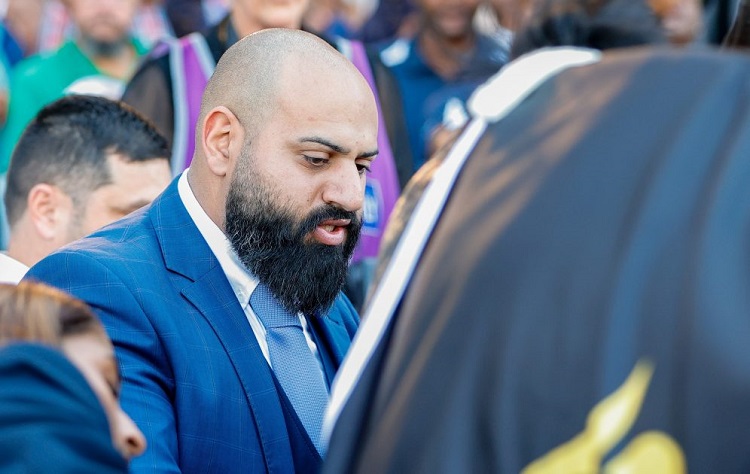
Tony Peter Opens His Heart About Saturday's Debacle


Snaith Supportive Of NHA Initiative Despite Two Scratchings
Justin Snaith holds The Met trophy for the second successive year (Picture: Wayne Marks)
The Justin Snaith yard were left shocked by two of their horses being tested above the TCO2 threshold level at Hollywoodbets Kenulworth on Saturday and scratched.
They have looked in to the matter and at this stage believe that most horses in Cape Town that have had second samples requested were all on the same ulcer medication.
Justin Snaith was still supportive of the NHA and their procedures to preserve the integrity of the sport and said to the Sporting Post,
“The welfare of our horses is what is most important to me as a trainer.”
“I welcome all and any testing that can help protect our thoroughbreds. This testing is being done with that goal in mind. I am sure there will be some tweaks and amendments to the testing protocol and procedures as the NHA gets more of these tests under its belt,” he added.
“I know our withdrawn filly, in a third test taken ten minutes after she was scratched, tested below the threshold. So presumably it is still a bit of a learning curve. That said, this initiative is to be applauded and supported.”
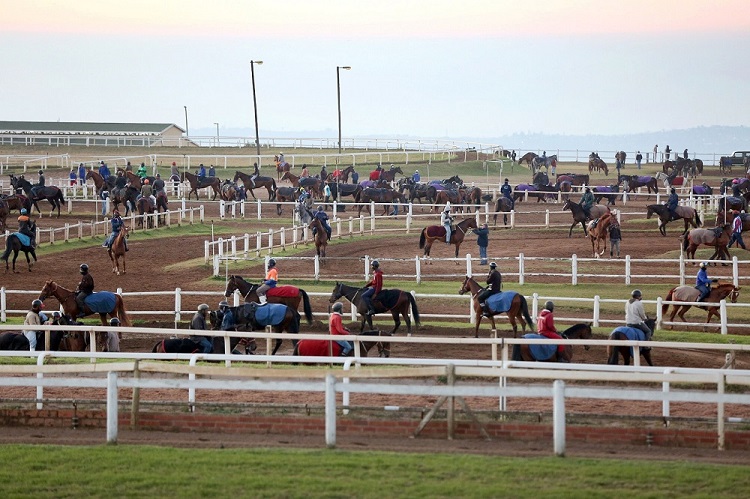
A Trainer's Reputation Worth More Than A Fine

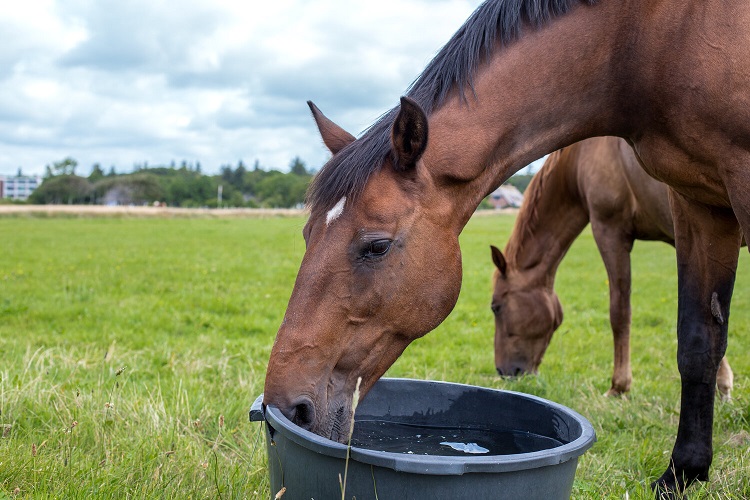
Bicarbonate Soda In Water A Decade's Old Horseman's Remedy
Pacaya Bounces Back To Best

Vaal Classic Preview
Today’s Question
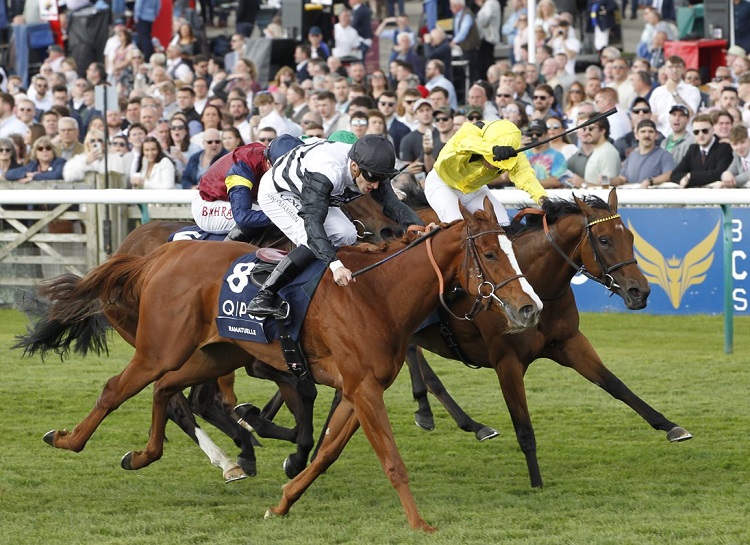
Elmalka (yellow colours) wins Sunday’s 1000 Guineas under De Sousa (Racingfotos.com)
How many British classics has Silvestre De Sousa won, the champion jockey in Britain in 2015, 2017 and 2018?
Weekend FIELDS
Vaal Classic, Tuesday
Today’s Question Answer
Silvestre De Sousa’s win on Sunday in the 1000 Guineas at Newmarket was his fist British classic victory.